14

February

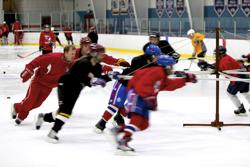
Hockey SchoolAs I watched the winning team celebrate a championship at a recent weekend tournament, a parent turned and asked “How in the world did that team win?” My response? By doing the little things.

In every game there are so many things that can go right for a team, as well as go very wrong. When it comes to winning games, especially at this time of year, coaches will tell players to stay out of the box, work hard, play with passion and to give it their all. And within all of these pieces of advice are details that often determine the outcome of a game. And it’s these little details, that when added together, that often play a large role in the final score.

So what are the little things that matter so much? I used to have a coach that said hockey is a game of ten-foot races. Races to the puck. Races to the net. Races to an open area. Quickness is an important aspect of the game and this type of effort is nothing more than will over skill. Teams in the biggest games that win the races are often times the team that also come out ahead on the scoreboard. It’s amazing how many times you see one team start winning the races, and then the other starts to stand around, and once that happens to the other team, good things start happening for your team!

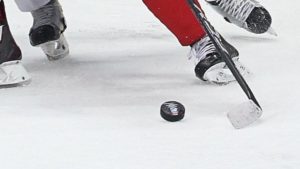
Getting the puck out of the zone or into the zone. Blue line play is so important, yet often overlooked in the flow of the game. During this championship game that I was watching, the winning team won nearly every battle of the blue lines. When they were killing penalties and in a defensive zone scrum along the sideboards, they found a way to get the puck out of the zone, thus killing more time on the penalty. On the other end of the ice, when they needed to get the puck into the zone to get a change, they didn’t simply get it into the zone ten feet across the blue line, they shot it in deep, and made the other team retrieve it, and start back up the ice. Making a team go 185 feet for a goal can make a big difference, no different than field position in football!

Face-offs. As youth hockey players get older face-offs become super important. While the center hopes to win the face-off, the coverage of players by wings is equally important. I watched a face-off in this championship game where the team won an offensive zone face-off and drew the puck back to the top of the circle, but it was picked off by an opposing wing that skated right out through two players that didn’t tie up. The result? A goal on the other end of the ice!

Another great coach once told me that you have to believe you are going to be good before you ever will be good. And while this may seem like a trivial thing, believing leads to confidence, and confidence leads to momentum. Again during this championship game one team not only looked like they wanted it more, but it looked like they believed more!

Good luck in your own playoffs this year and remember, it’s the little things that matter!
28

November

A new holiday tradition has emerged within a circle of family and friends over the past few years that involves scanning the national news for the footage of outrageous behavior by black Friday shoppers. The excitement and anticipation all kicks off Thursday evening when long lines start to snake their way around the outside of stores as people wait for hours and hours for access to the best deals of the year.

And once the store doors open, it’s like the hole shot at a motocross race, the gates opening at the Kentucky Derby and the opening faceoff at Game 7 of the Stanley Cup Finals all rolled up into one incredibly intense moment. And what happens next is anyone’s guess.

TV footage of these mad scrambles from the front doors of the store to the electronics departments resembles the running of the bulls in Pamplona, Spain. Hearts are pumping and adrenaline is at peak levels, it’s a complete frenzy. And then it happens, excitement turns to frustration, then aggression and ultimately anger. Arguments ensue and in some cases, fights break out and punches are thrown. You really can’t make it up.

So what does the behavior by some holiday shoppers have to do with the behavior of some hockey parents? There are actually some similarities – common denominators – in the behaviors witnessed in both hockey rinks and shopping malls. Unable to control the energy and excitement of the moment, some people tend to let emotions get the better of them, and their better judgement.

As we enter the holiday shopping season, and the invitational hockey tournament season, it’s a great time to take a deep breath and remember what is really important at this time of year, and what type of memories we are creating for our kids around the Christmas tree, and our hockey players around the rink.

Some of the best memories of playing youth hockey don’t involve the wins or losses, but instead the great teammates that turn into great, lifelong friends. Competition can bring out the best, and the worst in people, and it’s up to each individual to decide how they are going to react in emotional situations.

An old coach used to say that if you are properly prepared and confident in yourself and your ability to perform, then you are well-positioned to be successful. Hockey is the greatest game on Earth, and a sport full of excitement, energy and intensity. How parents and players manage emotions during a game can greatly influence the outcome of the situation and whether or not you achieve success.

So whether you are trying to win the race to the puck, or the race to a high-discounted flat-screen TV, remember that both on and off of the ice, this is the most wonderful time of the year!

Youth hockey players always start the summer with great intentions on training. Developing a better shot, a better stride and a better all-around game might be on your list. So how can you make sure that when the sun sets on Labor Day you will have better skills than the first of June or 4th of July? Here are some tips, and it all starts with a plan.

Make a plan. And make a list. Think back to last season and the areas of your game that you needed to improve on. Prioritize the skills that you are going to focus on and then commit to a regular schedule. Post your plan and your list in an area that you will see it every day, and let it be a motivator to get started, and keep going.

Fun Factor. Summer should be about having fun, and there is no reason that your training can’t be fun, along with some sweat and hard work. Turn on some music, dump out a bucket of pucks and start stick handling and shooting. Before you know it, 10 songs will have gone by and your shot will be better for it.

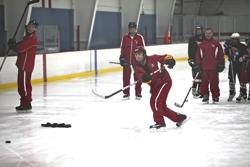
Try Something Different. At our hockey camp we like to talk about training the CARTER Method: C=Control, A=Agility, R=Reflex, T=Technique, E=Edge, R=Retention. Including a new routine or training method into your schedule will help keep things fresh and motivating.

Everyone loves winter hockey, but here at Greg Carter Hockey Schools we especially love summer hockey and all of the training and growth opportunities that come with it. We have watched so many young athletes blossom over the summer months as they push and challenge themselves to get out of their comfort zone and take their game to the next level.

We invite you to take advantage of the outstanding high performance training opportunities we have available this summer. Our hockey school will be in ten states including Alaska, Connecticut, Illinois, Massachusetts, New York, New Jersey, New Hampshire, Pennsylvania, Vermont and Virginia.

For more than two decades our experienced team of coaches has been focused on player development and summer hockey training. We hope to see you at one of our camps this summer and look forward to helping you reach your goals!

19

April

April is one of the great hockey months. In the NHL we have the push to the playoffs, which means a few things: the intensity ratchets up several notches, the speed of the game shifts up a gear or two and of course the facial hair is grown out. During April we also have college hockey’s Frozen Four. This is another great tournament as unpaid players are putting it all on the line not for a huge paycheck, but rather for the simple right to win a championship.

You can’t help but watch the incredible hockey this time of year and wonder, ‘what does it really take to get to that level of play’ . . . not just playing at the highest level, but to advance through the regular season and the playoffs and ultimately hit the ice and play on the biggest stage, under the brightest lights for the right to hoist the biggest trophy.

For most of players, and you’ll hear this in post-game interviews, the ‘what it really takes’ is determination. Not just team determination, but individual determination.  And that determination didn’t just start at the end of the regular season or the weeks leading into the playoffs as the team fought to make the post season. For the most successful players, that determination started a long time ago in a basement, garage, backyard rink or local park.

Determination goes hand and hand with hard work. The great Vince Lombardi once said “The price of success is hard work, dedication to the job at hand, and the determination that whether we win or lose, we have applied the best of ourselves to the task at hand.”

Every hockey player wants to win, wants to make the playoffs, wants to play for the championship and wants to hoist the trophy. The reality is that the players who do end up in these games are the ones who have realized at a young age what it really takes to get there. First and foremost it requires a love of the game. After that, it takes commitment, determination and hard work.

The best players that I’ve played with have all possessed these traits. They were the guys at the rink first and off the ice last. They loved shooting pucks. They loved practicing and trying to get better every day. And I mean every day. They loved being at the rink, and when they weren’t they were making mom and dad upset by staying at the local rink two hours too long. They were quintessential rink rats, who also had skill, determination and weren’t afraid of hard work.

So when you see players on TV hoisting a trophy, some doing so in tears, it’s important to understand that the journey for these players didn’t start at the beginning of the season. It started at the beginning of their recognition that with determination and hard work, there can be no limits to your success.

When does your journey begin?

One of the many great things about hockey camp is the people you meet. Players, coaches, trainers and families from all over the country come together for this special week and it’s nothing short of an awesome experience to skate, talk and learn from others. So who will you meet at hockey camp this summer? Here are 5 people you are sure to have fun with and create lasting memories.

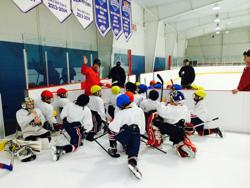
The Coach. We all have a coach who makes an impression on us, and some of the best coaches are those who teach you new things, in a way you have never been instructed. Each summer at camp our students create a bond with a coach that extends long after the week of camp is over. Many keep in touch throughout the season, and we are very proud of our knowledgeable and personable coaching staff.

The New Buddy. Going to a hockey camp can be intimidating, especially when doing it for the first time or going alone. Over the years we have watched kids show up the first day and hardly say a word to anyone, and end up being the kid we can’t keep quiet by the end of the week. Everyone finds a buddy at hockey camp and like the coach, those relationships often last beyond the last day of camp.

The Skillmaster. This one is kind of difficult to explain, but think the top scorer, mixed with a gift of gab and a healthy dose of confidence. Every camp has the player that has worked their tail off and has become just a step faster and a goal better than everyone else. We like these kids at camp because they motivate and inspire – one way or another- for the rest of the players to be just as good as they are.

The Most Improved. The first day at camp is always exciting for everyone, including the staff. We really enjoy getting to know the kids, assessing their talents and identifying their areas for improvements. What we really look forward to on the last day of camp is deciding which player has worked the hardest and developed the most during camp. We have a motto at camp: “get better every day”.  And we push players to do just that.

The Class Clown. This kid is part Drake, part Josh; innocent, but always guilty. He’s the kid everyone at camp instantly connects with, keeps the group bonding and always has something funny to say. Oftentimes the class clown is also the hardest worker and most respectful. But one thing is for certain, he/she is always funny.

There are no shortages of stories, lessons and learning that takes place at hockey camp, and we hope you choose to improve your game and make your memories at our hockey camps this summer. Remember to have fun playing this great game, and to get better every day!

Rails

Last year here in Massachusetts Mother Nature delivered us more than 100 inches of snow.  It was a winter to remember with record-breaking snowfall that seemed to find its way into our lives on a daily basis. And just when we dug out from one storm, another was on the way, dumping a dozen more back-breaking inches of snow on top of the sidewalks and driveways that we just got done clearing.

This year we are right around 25 inches of total snowfall, or roughly a quarter of the snowfall of only a year ago. As I was discussing this with someone at the rink the other day, the conversation turned to the hockey season last year, and like the weather, what a difference a year can make.

At this same point last year the guy I was talking with was in the midst of buying every shovel and ice scraper he could get his hands on. He even went out and purchased a brand new snow blower, one of those machines with enough horsepower to throw even the heaviest snow clear across to the other county. This year most of his new equipment has sat unused in his garage.

Just like the weather, the hockey season and player performance can dramatically change from year to year. One season a player may score goals like Jaromir Jagr, but the next have a dip in performance and struggle to find the back of the net.

It’s important to recognize that this is somewhat normal, and that development is a marathon, not a sprint. What players need to focus on is making sure they are preparing themselves not only for the great games and seasons, but also for the times when they need to go back to basics. Like my friend who went out and purchased all of the equipment to be prepared for snow, players should have the tools necessary to be prepared for hockey.

Mastering the fundamentals of hockey is a key ingredient to long term success. There is a belief held by many experts about the ‘10,000 Hour Rule’, which essentially says that 10,000 hours of practice to become world class in a field.  If you are a serious hockey player you have probably heard about this, and are well on your way to finding the training and ice time that will help you master the skills necessary to take your game to the next level.

While it seems no one can accurately forecast the weather (sorry local weatherman), you can help forecast your hockey career. Whether it’s 100 inches of snow and 50 wins one season, or 25 inches and 12 wins the next, the big question is this: Are you going to be prepared?

We hope so, and have plenty of summer opportunities available for players of all ages and skill level. While we don’t have shovels and snow blowers to prepare you for next winter, we have coaches and trainers who know the game and are eager to teach. Thanks for reading and we look forward to seeing you this summer!

19

January

Succeed In Scoring More Goals

Posted by Greg Carter

Rails

As the season turns the corner and the standings start to tighten up, players and coaches know that the ticket to the tournament lies in scoring goals. Great defense is important, but you have to score to win the big prize. Here are a few tips to help you find the back of the net in your next game.

Pick a plate. If you ever watch skills competitions there are plates or bulls eyes in each corner that serve as targets for the all-stars to hit. When the pucks hits the plate they either fall off or break. It’s a fun way to show the impact and importance of picking a corner when shooting to score. Next time you are coming down the ice and have a chance to score, rather than firing right at the logo on the goaltenders sweater, think about picking a corner, and blowing up that plate!

Lateral movement. This is important at all levels of the game, but especially at the youth levels where if you can learn it young, you are bound to score a ton of goals. We see this a lot, especially on rebounds, where the puck will bounce from the goaltender right onto the stick of an attacking forward, but rather than moving right or left, the player shoots it right back into the goaltender. Practice moving the puck across your body to both the left and right and before too long it will become second nature to move laterally. And to score more goals!

Pass the puck. Great goal scorers know that they can’t do it alone. Passing the puck to teammates and then moving to open space for the return pass is one of the most effective ways to score goals. If the goalie only has one player to focus on they have a better chance of stopping the puck. Once you start involving other players and the goalie starts moving in their crease, space opens up and you will find more net to shoot at. Pass the puck and skate hard for the return pass or rebound.

Get to the net. This one seems obvious and easy, but the more youth hockey games I watch the more I realize that you can’t instruct players enough when it comes to getting to the net. Whether you are looking for a pass or a rebound, you need to be near the net…not on your way there or skating passed it below the goal line. In any given game there are going to be a lot of puck scrambles, rebounds and passes that happen in and around the crease, and the only way you are going to capitalize is if you skate hard and get there.

Good luck incorporating these tips into your game and have fun scoring your next big goal!

19

September

The Season Kick Off!

Posted by Greg Carter

Rails

With Labor Day and another summer in the rear view mirror, footballs are air born and preseason NHL games are starting to dot the TV schedule. This could only mean one thing; the youth hockey season is right around the corner.

As players gear up for the season, it’s important to take the time to reflect on what was accomplished during your summer hockey training, and your plans to use the development to be a huge contributor and leader on your team this season.

A good way for players to start this season, is to actually think back to last season.

What areas of your game needed work?
What were the goals that you set for the summer? 

Hopefully your summer training allowed you to refocus, work on new skills, get rid of any bad habits and position yourself for a great season.

The areas that you identified as needing work in your post season evaluation were hopefully the key areas of focus for you over the summer. Now is the time to apply everything that you learned, as well as show off those skills that you mastered. Maybe you needed to increase your speed, develop a better shot or improve your stick handling skills. Make sure you take what you learned and apply it to every practice, every game and every shift this season.

Hockey is a game that requires many skills, and putting forth the time and effort in the off season to work hard on your development is part of the equation, but what you do on the ice this season is the true test. Are you prepared to apply your development to your everyday hockey experience?

Everyone has heard the slogan that ‘practice makes perfect’ and this is especially true when it comes to using the tools that you learned over the summer to improvement your skills everyday this season.

Good luck with the start of  your season and we look forward to hearing about your next great hockey experience!

Rails

The excitement for the NHL Playoffs may be greater than ever. Regardless of whether your favorite team is in the hunt for the Stanley Cup, watching the best hockey players in the world compete at the highest level for the top prize in the game really is must watch TV.

From the intensity and speed to the awesome goals, amazing passes and phenomenal dekes, if you are a fan of hockey you are probably glued to the TV. For youth players it is a time when they can really sit and learn from the best of the best.  Cheering for your favorite team is always exciting, but for true students of the game who want to learn a new move, how to back check hard and pick up the weak side wing and everything in between, the NHL Playoffs are a great learning opportunity.

Not only can players watch intently on the individual and team play, but the NHL Playoffs should also serve as inspiration to take your own game to the next level. Watching a great wrist shot beat a goalie top shelf should inspire you to shoot more pucks. Watching a player dance around a defenseman into the open ice should provide the motivation to practice stickhandling even more. Watching the ‘give it all’ attitude of every  player on the ice should encourage you to train throughout the summer, stay in shape and hit the ice in the fall ready to go.

Most great players have that ‘ah-hah’ moment where they realize that to get to the top of the game they need to train hard to get there. Watching the best players in the world and picking out a few moves from a favorite player and then trying over and over to master the skill is a great opportunity to help your overall hockey skills.

Great players have all grown up watching their idols inspire them, and then headed out to the driveway or down to the basement to reenact the big play.

During the next NHL game keep an eye out for what you can learn and apply to your own game. Not only is watching NHL Playoffs awesome from a fan perspective, but it can really be the inspiration to help take your game to the next level.


22

January

Tips for scoring goals

Posted by Greg Carter

Rails

What is more fun than scoring a goal in hockey? Well, maybe assisting on a goal! But there is no arguing that putting the puck by the goaltender is what every player strives for to help their team win, and here are 5 tips to help you score more goals this season.

1. Shoot like you mean it. Too many players shoot like they are trying to just get the puck across the goal line. We often see this when players come to our hockey camp. Shoot like you mean it, and not only want to put the puck in the net, but right through the back of the net!

2. Crash the net. When you know a teammate has a shot on goal, crash the net. This means getting yourself to just outside the crease, not the hash marks or 10 feet out. Getting the rebound just after the goalie gives it up catches him/her out of position, and gives you the greatest opportunity to score.

3. Keep moving. Great players anticipate the play and where the puck is going. Wherever you are on the ice, move your feet and get to the open area or get to the puck first. Using your hockey sense and knowing where to go, and actually getting there, will put you in prime position to score goals.

4. Be confident and patient. These two goal-scoring attributes often go together. Some of the prettiest deke goals result from being confident in a move, and patient enough to wait for the play to evolve to the point you have a clear lane to the net, shot on goal or opportunity to put your move on the goalie.

5. Good old fashioned practice. There are no shortcuts to scoring success, and for every player that scores with a rocket ‘snipe’ and makes it looks easy, they have shot hundreds, if not thousands of pucks on and off the ice. Something we preach at our hockey school is that in practice, finish every drill with a shot on goal like it’s a game situation, not just a shot to finish the drill.

At our summer hockey school and hockey clinics we take great pride in teaching players the fundamentals, as well as advanced skill sets needed to score goals. Check out our summer hockey camps for more information about how we can help you become a better hockey player.

Have you found success scoring goals? We’d love to hear your story, share it

Subscribe

With RSS feeds, you don't have to visit our site everyday to keep up to date. Simply subscribe to our blog via RSS or Email and our posts will come to you!