31

January

Goal Scorers & Prolific Passers

Posted by Greg Carter

Most teams have a goal scorer that can be counted on to find the back of the net on a regular basis. And as every good hockey coach will attest to, wherever you find a goal scorer, there is usually a great playmaker nearby. While everyone wants to score goals, having the talent to read a play and put the puck on the tape is an equally impressive skill.

Are you a good passer? Making a good pass can be the difference between winning and losing a game. In practice it can be the difference between a great start to a drill, or it ending before it ever begins as the puck slides down the entire length of the ice.

Practicing passing, and the proper fundamentals, should be a regular part of your skill training. Becoming a better passer is a simple way for players to make huge contributions to their team, and it all starts with a good hockey personality. A good personality you might ask? Absolutely, because in order to be a good passer you can’t be a puck hog! Great passers have a high ‘hockey IQ’ and try to making the right hockey play, not just trying to light the lamp themselves. And best of all? Great playmakers know that when they make a great pass, they oftentimes can expect a great pass back!

Tips and tricks to passing with precision:

Vision. Making a good pass starts with keeping your head up and being aware of the play. The skill of passing involves reading and anticipating the play, and not just making a pass, but making the right pass.

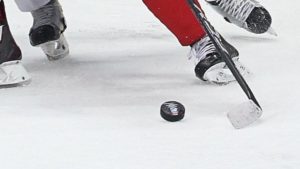
Accuracy = Tape-to-tape. Players hear this all of the time from coaches, and in order to make an accurate pass you need to look at your target and make a good, crisp pass with a proper follow through. Taking the extra split second to find your target and see how fast he is moving is something that will come naturally with practice. A pass into the skates of your linemate is a surefire way to quickly end a breakout or breakaway. Practice makes perfect, so hit the tape every time in practice and you stand a good chance of doing the same in the game!

Mechanics. The mechanics of passing have changed over the years as sticks have evolved. Gone are the days of needing to over emphasize receiving the puck, especially as players get older and stronger and the stick flexes when receiving passes. Some fundamentals do remain constant, such as not slapping at the puck. This is a common mistake players make at younger ages. Instead of slapping at the puck, players should concentrate on the puck rolling off the blade from the heel toward the toe in a sweeping motion. Weight transfer is also important, so move from your back to front skate as you begin your follow through.

Once players master the basic fundamentals of passing, they can start to practice more advanced passes such as a saucer pass, which is one of our absolute favorites! Take the time to work on your skills so that when the game is on the line, you make the perfect tape-to-tape pass!

Need more help with your passing and skill development? Join us at one of our 2018 Summer Hockey Camps in ten states this summer!
12

December

The Need For Speed

Posted by Greg Carter

Hockey can often seem like a very complex game, but it really doesn’t have to be. Simply put, it is a game of creating favorable odd-man situations and winning ten foot races to the puck, which we have talked about in previous articles. Every player who laces up their skates has a need for speed, and while some possess a natural talent for accelerating like a Jack Russell Terrier chasing a red a squirrel through the neighbor’s backyard, most players have to work extremely hard on and off of the ice to develop and maintain their speed and quickness.

Here are a few great tips to building and enhancing this important area of your game:

  • Top speed comes from maintaining acceleration. Use your inside edges to start off and create speed, then use your outside edges to maintain your stride. Practice moving between the two edges and feel the difference. Also swing your arms north and south to aid your momentum. At out hockey camp we see many players who slow themselves down by moving their upper body and arms east and west, this is a pretty simple correction that can have immediate impact.
  • The harder you dig into the ice, the faster you will propel yourself. Reaching top speed, and maintaining speed, requires full body coordination. This is where technique is very important, work on it and built a solid foundation for your stride and over time, you will become a fast skater.
  • Focus on powerful, long strides. This includes maintaining a 90-degree knee bend, and using your three skating joints: hip, knee and ankle. In order to extend your stride, you must work on your recovery, which means bringing your knee and skate under your shoulder, allowing you to maintain your balance and give you the ability to reach full extension with your stride.

An explosive start to your stride ultimately means more quickness. Building muscle, along with mastering the proper fundamentals, is important to increasing speed. Squats and plyometric training are two common exercises that athletes use in the weight room to build the muscles that help win the races. Take the time on the ice to work with coaches and instructors to refine the mechanics of your stride. Off of the ice, put in the time with a strength coach focusing on the leg muscles that will provide the horsepower for your stride.

Like all of the great skills needed to achieve your goals, developing speed comes down to who is willing to put in the time to work hard at it. If you take the time to create a fundamentally sound stride, and also develop strength, you will be well on your way to possessing game-changing speed!

We hope you are having a great season and look forward to working with you at one of our summer hockey camps in ten states next summer!

02

May

Finding Your Next Level

Posted by Greg Carter

Watching the NHL Playoffs, it becomes obvious very quickly that the players are competing at an entirely different level out there compared to the regular season. The speed and quickness of the game is greater. The intensity is higher. It makes you wonder, how do these players take an already accelerated game to a whole new level?

There is a quote about leadership and coaching that says if you can raise the level of effort and performance in those around you, you are officially a leader. When it comes to coaching hockey players, especially elite hockey players such as those playing in the NHL, finding a way to connect with each player and understanding how to get the most out of them is a key ingredient in the recipe for success.

But when it comes to finding that next level it begins and ends with the individual player. The great Vince Lombardi once said that if you’ll not settle for anything less than your best, you will be amazed at what you can accomplish in your lives. When you watch playoff hockey, these players are not settling for anything less than their best. They lay it on the line for every race to the puck. Every shot on goal and every pass is a laser. The battles in front of the net and in the corners are their own individual cage matches.

When you break down the game and analyze how amazing the individual talent and skill sets are out there, it can be compared to an engine in a machine. If the engine is built properly – in the case of hockey players, developed and trained properly – and also cared for properly, there will be a time when you can run that engine at the highest RPM’s and push it to maximum performance.

Youth hockey players who spend the time training and working on skills are doing just that, they are preparing themselves – their engine – for the periods of time (the playoffs) when they are going to need to rely on optimizing their performance at the highest level.

As the run for the Stanley Cup continues, it should serve as inspiration to take your own game to the next level, to shift your engine into the next gear. There is another great quote about commitment that says you’re either IN or you’re OUT. There is no such thing as life in-between.

We invite you to join us at one of our hockey schools this summer and with our training, find your very own next level!


Hockey SchoolGet ready to start your journey! With the hockey season behind us and summer training and development on the minds of hockey players everywhere, we invite – and challenge – you to become a better hockey player this summer.
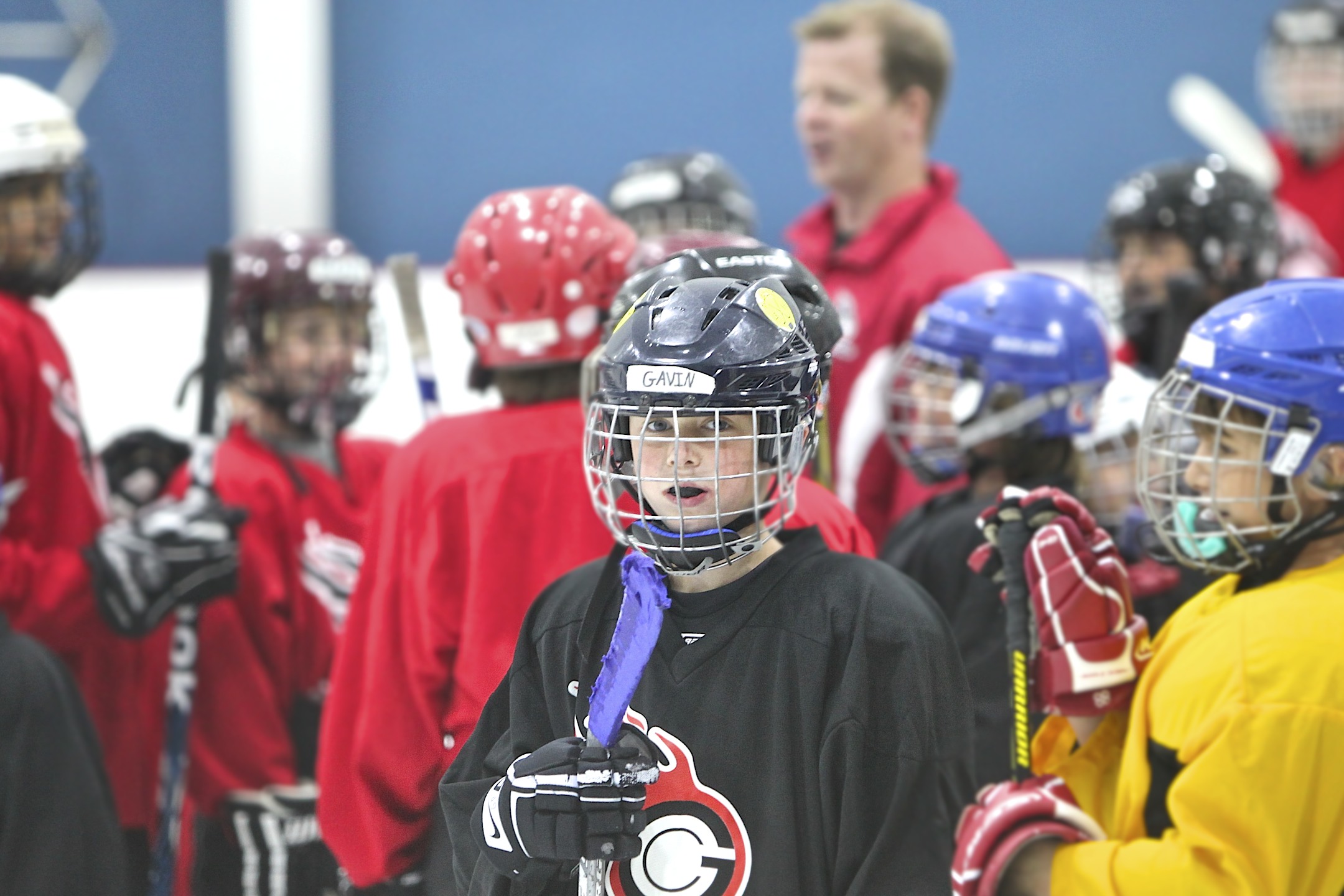
Mapping out your summer hockey training is an exciting process, and our staff at Greg Carter’s Hockey School welcomes you to join us at one of our camps located in 10 states this summer. As we have discussed this season in our many player development articles, we have 23 years in the hockey school business and have enjoyed training thousands of hockey players who come to us sharing the same goal as you; to become a better hockey player!

We take development seriously. Our pro staff challenges skaters to reach their full potential by teaching the fundamentals of skating, stick handling and shooting. We pride ourselves in teaching in a way that builds confidence and leads to continuous improvement. Simply put, at our hockey camps and hockey clinics we offer you the most on-ice instruction with the best results.

A few of the highlights of training with the CARTER METHOD include Control, Agility, Reflex, Technique, Edge and Retention. Our website is loaded with player tips and testimonials about our successful teaching methods. If you are a serious hockey player looking for an elite training program this summer, give us a call or click here to register for one of our programs!

We look forward to a great summer and to having the opportunity to help you achieve your goals!

When Auston Matthews scored a hat trick in his first NHL game, he became only the fifth player in NHL history to net 3 goals in a career debut. He also became the first Maple Leaf to accomplish this, which is pretty incredible for a team with the history of this original six team. Later in the game when Matthews proceeded to find the back of the net for the fourth time, you knew this would be a night that would have the hockey world talking.

It was little secret that Matthews would be chosen first in the 2016 NHL Draft, but as obvious as the choice seemed to be, the Matthews hype has been taken to an entirely new level after his opening night performance. Suddenly, everyone wants to know everything about this silky smooth forward from Arizona.

So what can youth hockey players learn from Matthews’ map to the NHL?

Skill Development. From an early age, Matthews focused on developing skills versus playing a bunch of games with all of the top teams in the area. He spent tons of hours playing small area games. He worked tirelessly on powerskating. He had the puck on his stick all the time learning to ‘stickhandle in a phone booth’. He focused on skill development and mastering the fundamental skills that would allow him to reach his full potential.

Work Ethic. Any coach will tell you that when you can combine exceptional skill with focus and drive, you have the recipe for a great hockey player. When Matthews learned a new skill he didn’t quit until he mastered it. Matthews’ work ethic is a shining example of what can happen when you have a mentality of not just learning a skill, but mastering a skill through repetition, commitment and hard work.

Shoot Pucks. At our hockey school we love to tell players that they can never shoot enough pucks. Matthews uses the skills he learned playing small area games to create time and space, which ultimately affords him the opportunities to get a lot of shots on goal. And not only is he getting shots on goal, but because he has a deadly shot, he has scored a lot of goals.

And in his first NHL game, he got 4.


04

October

With the start of the hockey season upon us, it’s important to stop and think about your goals for this winter, and one of the first questions you should ask yourself is if you are a coachable player.

What is a ‘coachable player’? A few characteristics of coachable hockey players include:

  • Respecting your hockey coach and his/her ability to make you a better hockey player.
  • Accepting that there is always room for improvement and growth.
  • Acknowledgement that constructive criticism is part of hockey development.
  • A willingness and accountability to apply what is learned.
  • A burning desire to work hard and become a better hockey player!

In our many years of coaching and running hockey clinics and summer hockey schools, we have seen many hockey players who have great skills, but they simply aren’t coachable. This can be due to parent influence, ego, a lack of respect for the coach or inability to accept criticism. Regardless of the reason, a player will have a difficult time achieving their full potential if they are not coachable.

Perhaps one of the most important ingredients in being coachable is simply having a great attitude and approach to the game. Players who come to the rink eager and willing to learn at practice are going to listen to coaches rather than rolling their eyes at them. These players are going to think about the areas of their game that needs improvement rather than brushing it off as a coach picking on them. These players are the ones who leave practice excited and feeling like they improved on a skill, rather than dwelling on the fact they aren’t perfect.

Coachable players tend to develop their skills and knowledge of the game and an accelerated pace. They also tend to be those who the coaches like to work with, because the coaches can see the improvement, and find satisfaction in helping a player take their game to the next level.

Really good coaches thrive on feeding the hunger of coachable players. Good coaches will recognize and appreciate your desire to improve, and a positive coach/player relationship will most often result in the coach doing everything they can to help you achieve your goals.

So before the season really gets going, take a minute and ask yourself: Am I a coachable hockey player?

09

August

IMG_6806 - Version 2Training hockey players and helping in their development is very rewarding. We’d like to introduce some of the best players we met and had the privilege of working with this summer.

In a recent blog post we introduced you to five people you will meet at summer hockey school. As we enter our final month of hockey school we would like to introduce you to a few of our best players from our travels across the country this summer training hockey players and promoting skill development.

The Character Kid. Everyone knows character counts, and this summer we met plenty of exceptional players and parents who had great character on and off of the ice. When it comes to skill development and becoming a great hockey player, who you are as a person, how you carry yourself and treat teammates is all part of the ingredients for success.

The ‘Centered’ Center. Balance is important not only in skating and performance with stride and hockey skills, but balance is also important when it comes to hockey and a daily routine. Our staff met many hockey players this summer, and those who came to the rink with the most enthusiasm, excitement and willingness to learn were often those who had good balance in their life. Many were multiple sport athletes. Some were taking summer school. Others came from water skiing at the lake to the rink. Remain ‘centered’ with good balance when it comes to your hockey schedule and you will find success.

The Skinny Skillmaster. Most of the players we train at our hockey camps are between the ages of 8 and 16. What this means  for example, is that some Peewees weigh 70 pounds and others might weigh 150. One player thought he needed to really bulk up and gain weight, but what he really needed was patience for his body to grow into his frame. A good diet during this age of development is important. We saw many kids eating junk food, drinking highly caffeinated energy drinks and other foods and beverages that you would never find in a college or professional locker room. Food is fuel for your body, but not all food (and beverages) are good fuel.

We hope you had a great summer of hockey and improved your skills. Make sure to keep these hockey development tips in mind as you work your way through August and onto your team for the upcoming season!

Subscribe

With RSS feeds, you don't have to visit our site everyday to keep up to date. Simply subscribe to our blog via RSS or Email and our posts will come to you!

Archives