Each summer we work with hockey players from across Massachusetts as well as the entire country. Our staff is asked many questions about hockey development by both players and parents, and here are the most frequently asked questions.
What does my child need to do to get better?
Every parents wants the best for their child, especially hockey parents for their hockey players! The first thing to recognize is that development is not a sprint, it’s a marathon. For players to get better they need to commit to a long term development strategy geared towards working on specialized skill sets at each level from Mites on up. If a player masters each of these age-specific skills, they will have a great foundation to build on throughout their career.
Should my child play a variety of positions or just forward or just defense?
This is an interesting question because of how often it gets brought up. At young ages kids need to develop a full understanding of the game of hockey including skills, strategies and tactics at both forward and defense. Many great defensemen playing at the collegiate and professional levels attribute their ability to ‘see the ice’, step up into the play and contribute offensively to having played forward as a youth or even a prep player.
How can I score more goals?
Every player wants to score goals, and there is one surefire way to find the back of the net more often: shoot pucks. A great coach once told me that you can never shoot enough pucks, and he was right. Another way to score more goals is to become a great stickhandler. Spend time at practice, home and hockey camp working on stickhandling and it will pay off on the score sheet!
What can I do to improve my skating, speed and quickness?
We love this question at our hockey school because skating and stride is too often overlooked by hockey players. Even the smoothest, fastest and quickest skaters are continually working to improve in this area because they understand the importance of speed, quickness and stride in the game of hockey. To improve your skating focus on things like edge work and technique. We like to really focus on these two areas at our hockey camps and the results can be extremely positive.
What do I need to do to make the team next year?
This is always the biggest question as we work with players prior to tryouts. Regardless of what level you are playing at or team you want to make, there is no substitute for commitment and hard work. Create a list of skills that you need to work on and spend time on and off the ice mastering these skills. Shoot pucks and stickhandle rather than watching TV or sitting on your phone. Hockey is becoming more competitive every day and the players who make the team are the ones who put in the time and dedicate themselves to learning new skills and getting better everyday!
Do you have a question about your hockey development or summer hockey camp? Email us and we would be happy to answer your questions!
We have hockey camps in ten states this summer including Alaska, Connecticut, Illinois, Massachusetts, New Hampshire, New Jersey, New York, Pennsylvania, Vermont and Virginia. We hope to see you on the ice soon!
 The Ham & Egger: This is for the every day player that isn’t necessarily the standout on the team, but every practice and game is consistently good and you just know what to expect from them. Every team has and needs players who may not have the top end talent and skill, but they have a drive and desire to win the battles in the corner and the races to the puck. Will over skill.
 The Pick Me Up Fist Bump: A pick me up player is important to the team. The fist bump is for the player that is always a good teammate and not only loves to celebrate the big moments with a fist bump, but to also use it in the difficult times to say ‘I got your back’.
 The Highlight Reel Movie Camera: This is for the players who have the ability to make moves on the ice that other players try to emulate. They are silky smooth with the puck, can stickhandle through a crowd and can deke goalies to score highlight reel goals.
 The Exhausted Dog Tongue: This describes complete exhaustion, think of your dog after throwing the ball with him for a half hour. Dog tired! When we run conditioning drills at our hockey camps it’s always fun to see the top players working the hardest. If your hockey emoji is both the highlight reel and the dog tongue, you should be proud of yourself!
 The “Whine”, Cheese and Violin: This describes the player who constantly whines about what position they are playing, not getting the puck enough or which line they are on. The violin emoji is often accompanied by the goblet and piece of cheese emoji’s.
 The Riverboat Gambler. This is the player with talent and the confidence that the chips are stacked in their favor. A dangerous combination that can win championships, but also a risk factor that puts gray hair on coaches. The Riverboat Gambler is willing to risk it all for the big play, and win they score, they win big. But there is always the chance of losing it all with their mid-ice dangle with no safety valve.
 The All-In, All The Time 100: This is for the player that gives 100% in everything they do. They are a good teammate in the locker room, have a 100% positive attitude, are always working their hardest and love the game 100% of the time!
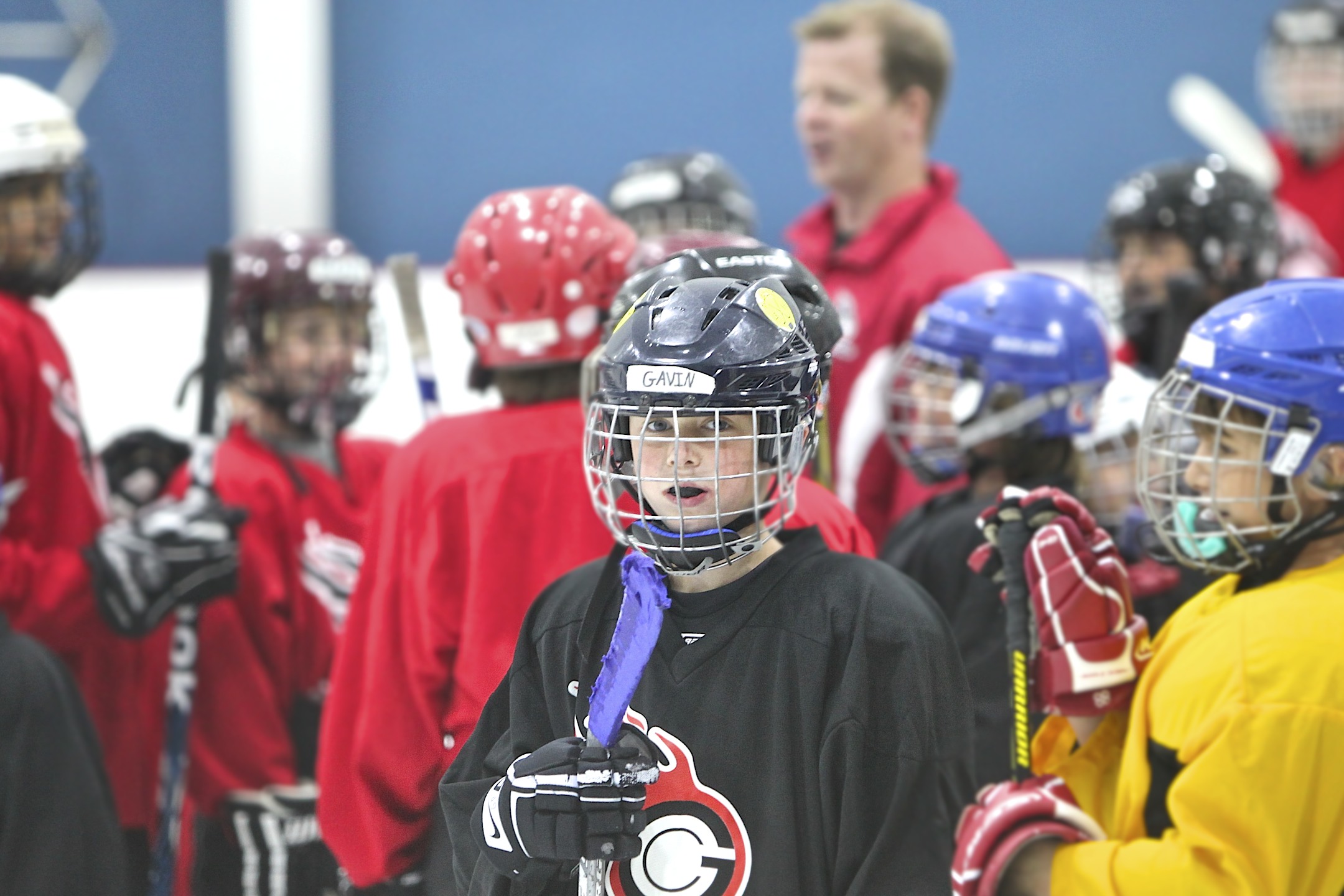 Training hockey players and helping in their development is very rewarding. We’d like to introduce some of the best players we met and had the privilege of working with this summer.