17

June

The Happiest Hockey Ever

Posted by Greg Carter

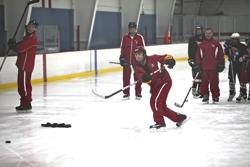
The Return to the Rink. After more than 25 years in the Summer Hockey School business this is a phrase that, given the moment in time, we never thought we’d be using. But we are, and after walking into the rink for the first time, we must admit, it has never felt better to be back in an ice arena! 

The chill in the air, the Zamboni, the sounds of pucks clanking off the pipe and the boards. Heck, even the smell of hockey equipment seems refreshing! All the familiar faces and places are back online and the energy inside of the ice rinks is nothing short of amazing!

Players have been so fired up to see their coaches, friends and to get back onto the ice that they have literally been running into the rink with their equipment! What a cool sight to see!  

As we launch our full schedule of 2020 Summer Hockey Schools we have some great plans and procedures in place to guarantee that players will receive top training and instruction geared towards maximizing skill development. Based on our first weeks back on the ice, the desire of players to learn, succeed and take their game to the next level has never been greater.

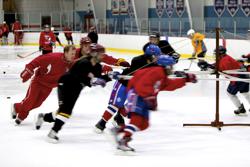
The intensity on the ice during drills and skills sessions is fantastic. Staff is focused on making the very most of the moment and players are responding with enthusiasm at an all time high. 

Over the past weeks we have answered many questions about dates, times, locations and more. Please feel free to email us with any questions you have about joining in the excitement and enthusiasm for Summer Hockey School 2020!

Thanks for reading and we look forward to seeing you at the rink soon!

07

April

Driveway Dekes & Dangles

Posted by Greg Carter

It’s a challenging time for everyone, and hockey players wanting to improve their skills are faced with a problem themselves as ice time and access to training facilities is non-existent. So what can be done to work on skills? It’s actually pretty simple, grab a stick and a ball and head out the front door! 

Stickhandling

A stick and a ball is really all that is needed to get some great stickhandling practice, and it can be done in a garage, basement or driveway. Keep your head up and practice stickhandling with the ball side to side in front of your body. Get creative and stickhandle on both sides of your body, then bring the ball behind and through your legs and back to the front. Hockey players only have the puck on their stick for about 45 seconds during a typical youth hockey game, so imagine the improvement of the ball being on your stick for 15 or 20 minutes in the driveway!

Shooting

If you want to develop a hard, accurate shot and score more goals, the best way to do so is by developing this motto: You Can Never Shoot Enough Pucks. Shooting pucks into a net or tarp can be super fun and competitie by creating games like around the world or, similar to playing ‘pig’ in basketball, playing ‘puck’ in hockey. When you think you’ve shot enough for one day, shoot 100 more!

Fitness For Hockey

Great hockey players are in great shape. Get out and exercise by going for a run. Stop along the way and do some sprints. Situps and pushups are also great exercises to develop strength. Stay strong and healthy and when it’s time to hit the ice, you will feel the difference and be a leader of the pack!

Stay Focused On Goals

When you finished last season hopefully you developed a sense of what areas of your game need improvement. Stay focused on those areas and continue your planning and preparation to improve your fundamental hockey skills!

Thanks for reading and we invite you to join us at one of our Summer Hockey Schools in 11 states during the summer of 2020. Please feel free to contact us with any questions and we look forward to seeing you at the rink in the near future.

Stay safe and healthy!

05

February

We are excited and proud to be entering our 26th year of summer hockey schools. Over the more than two decades that we have been training hockey players from coast to coast and border to border, we have had a lot of fun and met some great families and youth hockey players. In fact two years ago we were greeted by a black bear upon arriving at our cabin in Alaska for our camp at the McDonald Center in Eagle River!

In past articles we have talked about who you will meet at summer hockey school and training with players from surrounding regions is definitely part of the adventure. We have also talked about how new skills lead to new heights and the work and effort that it takes to go from the third line to the first line.  

Summer hockey school is the time to take successes from the season and build on them. It’s the time to make a list of goals for next season and improve on your fundamental skills including skating, passing, stickhandling and shooting. The CARTER Method that we use to train at our camp focuses on Control, Agility, Reflex, Technique, Edge and Retention. It’s a proven, time-tested training method and we invite you to join the thousands of players who have already experienced the results.

In fact many of our summer hockey school alum have gone on to play college hockey, junior hockey and some have made it to the NHL! Regardless of what your goals are for hockey our Pro Staff is excited to train with you this summer and help provide an awesome hockey adventure that will be both productive and memorable.

And maybe even an encounter with a bear!

For dates, locations and information about our 2020 Summer Hockey Schools in 11 states, click here.

03

October

As we hit the ice full speed for the season, I was recently reminded of one of the best rewards from our summer hockey camp, and it’s not at all what I would have imagined, or you might think!

Having played hockey for nearly my entire life – youth, collegiately and in the ECHL – and more recently running our hockey camp for the past two decades, I have met virtually every ‘category’ of player. There are the players who have all of the talent in the world, but never figure out how to dedicate themselves and put it to good use, resulting in shortened careers. There are the players who have all the will in the world, but at a point in time run out of the skill needed to make it to the next level. And of course a million other ‘categories’ of players including those who just want to have fun, meet friends and enjoy the camaraderie and teamwork.

But every so often you meet a player who is as good of a person off of the ice as they are a hockey player on the ice. Nothing is more refreshing than a player who can go out and score a hat trick, lead the team in points all season and is at the same time respectful to coaches and officials, a great student and maybe even volunteering to help others in the community. What is even more refreshing, and rewarding, is when as a coach and instructor, you have had the opportunity to watch this player grow throughout their career knowing you have had a hand in helping shape such a well-rounded individual, both on and off of the ice.

This past summer I had the pleasure of welcoming back a couple of players who grew up participating in our programs and our summer hockey camps. Both will be playing Division I hockey this year for a storied program that ‘wins’ as much in the classroom as they do on the ice. One will be a captain as an underclassman after leading his team in goals last year. These two players skated with our youth players and it turned out to be one of the most memorable and rewarding weeks of the summer.

When they arrived everyone knew who they were and that they were great hockey players. They didn’t have to say please and thank you to everyone they met, but they did. They didn’t have to interact, smile, laugh and try to help every player on the ice, but they did. They didn’t have to pull a struggling skater aside for extra edge work, but they did. They didn’t have to tell stories to every kid that asked about playing college hockey, but they did, because not too long ago it was them looking up to someone, asking those same questions!

Character is critical in hockey, and I was reminded of this watching these two at camp this past summer. We’ve said in past articles that “talent gets you noticed, but character gets recruited.” It was extremely rewarding – and inspiring – as I watched these two at camp to know that yes, they became great hockey players, but even more importantly, they became incredible young adults.

As you go through this season and strive to win every puck battle, every shift, every period and every game, keep in mind that the very best players, especially in the game of hockey, are also great off of the ice. Respect your coaches, teammates, officials, parents and teaches, and most of all, respect the great game of hockey. I can tell you that after spending more than four decades in hockey that if you do this, you will be remembered, and rewarded, for the rest of your life!

Thanks for reading and we look forward to seeing you at the rink soon!
 

16

March

Once that final buzzer sounds it’s only a short time before most players start to think “What’s next” . . . “How do I improve my game?” While many players think this, it’s those that follow through, set goals and work hard that actually hit the ice next season as a better player than last season. So the question is, how are you going to make the most of your off season training?

5 tips to the top of your game: 

  1. Start with a plan. This seems simple and obvious, but a plan isn’t a plan unless goals are identified and written down. Think back to last season and the difficulties that you had, identify areas of improvement and create a plan that will improve skills in areas that need the most work. Many players work on areas in which they are already strong. The great players spend time focusing on their weaknesses.
  2. Choose a program. There are many options on how and where to train. Do your homework, and research opportunities that are reputable and offer training and skill development in the areas that align with your goals and objectives. Once you make this important commitment, you will be once step closer to your off season goals.
  3. It’s summer, enjoy it! Off season training should be mixed in with a good balance of traditional summer activities. Hockey players that create a mix of training and fun are more likely to reduce injuries and also will stay with the program for a longer period of time.
  4. Dedicate yourself. When it does come time for training, whether it’s before going to the beach or after a round of golf, focus on what you need to improve on. Put yourself back into the place you were last season and think about the areas of your game that frustrated you. Listen to your instructors and coaches and skate each drill with the same intensity that you play the game. Dedicate yourself to the moment!
  5. Split the summer into 3 periods. June, July and August come and go very quickly. If you split your training and define goals for each month, it will allow you to focus and access your progress on a monthly basis. Players that we have trained at our summer hockey schools have told us they will identify 3 key areas of focus, and while they train all summer with them in mind, they may spend more time in June in shooting for example, and then shift the focus of July to power skating, and then August is all about stickhandling.

The goal of your off season training should be to improve your skills, increase your love of the game and to hit the ice this fall as a better hockey player than you left it in the spring. Good luck in all of your training and we hope to see you on the ice at one of our camps in 10 states this summer!

Youth hockey players always start the summer with great intentions on training. Developing a better shot, a better stride and a better all-around game might be on your list. So how can you make sure that when the sun sets on Labor Day you will have better skills than the first of June or 4th of July? Here are some tips, and it all starts with a plan.

Make a plan. And make a list. Think back to last season and the areas of your game that you needed to improve on. Prioritize the skills that you are going to focus on and then commit to a regular schedule. Post your plan and your list in an area that you will see it every day, and let it be a motivator to get started, and keep going.

Fun Factor. Summer should be about having fun, and there is no reason that your training can’t be fun, along with some sweat and hard work. Turn on some music, dump out a bucket of pucks and start stick handling and shooting. Before you know it, 10 songs will have gone by and your shot will be better for it.

Try Something Different. At our hockey camp we like to talk about training the CARTER Method: C=Control, A=Agility, R=Reflex, T=Technique, E=Edge, R=Retention. Including a new routine or training method into your schedule will help keep things fresh and motivating.

Everyone loves winter hockey, but here at Greg Carter Hockey Schools we especially love summer hockey and all of the training and growth opportunities that come with it. We have watched so many young athletes blossom over the summer months as they push and challenge themselves to get out of their comfort zone and take their game to the next level.

We invite you to take advantage of the outstanding high performance training opportunities we have available this summer. Our hockey school will be in ten states including Alaska, Connecticut, Illinois, Massachusetts, New York, New Jersey, New Hampshire, Pennsylvania, Vermont and Virginia.

For more than two decades our experienced team of coaches has been focused on player development and summer hockey training. We hope to see you at one of our camps this summer and look forward to helping you reach your goals!

One of the many great things about hockey camp is the people you meet. Players, coaches, trainers and families from all over the country come together for this special week and it’s nothing short of an awesome experience to skate, talk and learn from others. So who will you meet at hockey camp this summer? Here are 5 people you are sure to have fun with and create lasting memories.

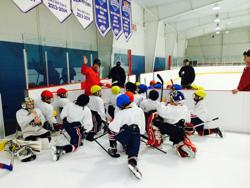
The Coach. We all have a coach who makes an impression on us, and some of the best coaches are those who teach you new things, in a way you have never been instructed. Each summer at camp our students create a bond with a coach that extends long after the week of camp is over. Many keep in touch throughout the season, and we are very proud of our knowledgeable and personable coaching staff.

The New Buddy. Going to a hockey camp can be intimidating, especially when doing it for the first time or going alone. Over the years we have watched kids show up the first day and hardly say a word to anyone, and end up being the kid we can’t keep quiet by the end of the week. Everyone finds a buddy at hockey camp and like the coach, those relationships often last beyond the last day of camp.

The Skillmaster. This one is kind of difficult to explain, but think the top scorer, mixed with a gift of gab and a healthy dose of confidence. Every camp has the player that has worked their tail off and has become just a step faster and a goal better than everyone else. We like these kids at camp because they motivate and inspire – one way or another- for the rest of the players to be just as good as they are.

The Most Improved. The first day at camp is always exciting for everyone, including the staff. We really enjoy getting to know the kids, assessing their talents and identifying their areas for improvements. What we really look forward to on the last day of camp is deciding which player has worked the hardest and developed the most during camp. We have a motto at camp: “get better every day”.  And we push players to do just that.

The Class Clown. This kid is part Drake, part Josh; innocent, but always guilty. He’s the kid everyone at camp instantly connects with, keeps the group bonding and always has something funny to say. Oftentimes the class clown is also the hardest worker and most respectful. But one thing is for certain, he/she is always funny.

There are no shortages of stories, lessons and learning that takes place at hockey camp, and we hope you choose to improve your game and make your memories at our hockey camps this summer. Remember to have fun playing this great game, and to get better every day!

Rails

Last year here in Massachusetts Mother Nature delivered us more than 100 inches of snow.  It was a winter to remember with record-breaking snowfall that seemed to find its way into our lives on a daily basis. And just when we dug out from one storm, another was on the way, dumping a dozen more back-breaking inches of snow on top of the sidewalks and driveways that we just got done clearing.

This year we are right around 25 inches of total snowfall, or roughly a quarter of the snowfall of only a year ago. As I was discussing this with someone at the rink the other day, the conversation turned to the hockey season last year, and like the weather, what a difference a year can make.

At this same point last year the guy I was talking with was in the midst of buying every shovel and ice scraper he could get his hands on. He even went out and purchased a brand new snow blower, one of those machines with enough horsepower to throw even the heaviest snow clear across to the other county. This year most of his new equipment has sat unused in his garage.

Just like the weather, the hockey season and player performance can dramatically change from year to year. One season a player may score goals like Jaromir Jagr, but the next have a dip in performance and struggle to find the back of the net.

It’s important to recognize that this is somewhat normal, and that development is a marathon, not a sprint. What players need to focus on is making sure they are preparing themselves not only for the great games and seasons, but also for the times when they need to go back to basics. Like my friend who went out and purchased all of the equipment to be prepared for snow, players should have the tools necessary to be prepared for hockey.

Mastering the fundamentals of hockey is a key ingredient to long term success. There is a belief held by many experts about the ‘10,000 Hour Rule’, which essentially says that 10,000 hours of practice to become world class in a field.  If you are a serious hockey player you have probably heard about this, and are well on your way to finding the training and ice time that will help you master the skills necessary to take your game to the next level.

While it seems no one can accurately forecast the weather (sorry local weatherman), you can help forecast your hockey career. Whether it’s 100 inches of snow and 50 wins one season, or 25 inches and 12 wins the next, the big question is this: Are you going to be prepared?

We hope so, and have plenty of summer opportunities available for players of all ages and skill level. While we don’t have shovels and snow blowers to prepare you for next winter, we have coaches and trainers who know the game and are eager to teach. Thanks for reading and we look forward to seeing you this summer!

11

December

Rails

The holidays are a great time of year both on the ice with tournaments and games in full swing, as well as off the ice celebrating the season with friends and family. I have actually found the the month of December to be a really interesting stretch of the hockey season because players are settling in and finding their place on the team.

How is your season starting out? Are you playing on the first line? How about the power play or penalty kill? Are you skating in your preferred position or do your coaches have you elsewhere? Are you scoring as much as you would like?

If you are having the success you anticipated, do you have a plan to continue playing at that level? Or, if you haven’t yet found your stride, are you prepared to work even harder? Youth hockey players at this time of year too often allow their current situation to dictate their work ethic. If they are not skating on the first line they resort to thinking they are a second or third line player. If they are not on the power play or penalty kill, they think they must not be good enough for special teams play. Conversely, some first line players get complacent and stop working hard, thinking that every time there is a power play they are going to be put on the ice.

The holidays are a great time to reevaluate your game and think about all of the hard work you invested over the summer to prepare for the season. It’s an excellent opportunity to rededicate yourself to being not just a good forward or defensemen, but a good, well-rounded hockey player who understands the game and can play in many different situations and positions.

Often times at summer hockey school we train forwards who say they don’t need to work on their backwards skating because they are a forward. Or we see defensemen who don’t work on their offensive moves and scoring because they feel their role is to prevent goals from being scored rather than scoring goals. The best hockey players are those who understand that it takes hard work and consistent effort in all areas to get to making the most out of the season.

As we enter the winter break, here are 3 holiday hockey gifts to help you get the most out of your season!

1. Attitude and work ethic. Playing hockey is one of the great joys of childhood. Make sure you remember this and bring a great attitude and awesome work ethic to every practice and game. A coach once told me that anything worth doing, is worth doing well. I have never forgotten this and it is especially true in youth hockey!
2. Coachability.  Coaches love players that show up ready to go and ready to learn. Make sure that you pay attention and digest what your coach is telling you. Many coaches have years of experience and played the game themselves. Take advantage of the opportunity to learn from those who have already been there and done it. Learn from them and do it better!
3. Pucks & Practice. This is simple. You can never practice enough, and you can never shoot enough pucks.

From our hockey home to yours, enjoy the holidays and we look forward to seeing you at the rink soon!
Greg Carter

22

January

Tips for scoring goals

Posted by Greg Carter

Rails

What is more fun than scoring a goal in hockey? Well, maybe assisting on a goal! But there is no arguing that putting the puck by the goaltender is what every player strives for to help their team win, and here are 5 tips to help you score more goals this season.

1. Shoot like you mean it. Too many players shoot like they are trying to just get the puck across the goal line. We often see this when players come to our hockey camp. Shoot like you mean it, and not only want to put the puck in the net, but right through the back of the net!

2. Crash the net. When you know a teammate has a shot on goal, crash the net. This means getting yourself to just outside the crease, not the hash marks or 10 feet out. Getting the rebound just after the goalie gives it up catches him/her out of position, and gives you the greatest opportunity to score.

3. Keep moving. Great players anticipate the play and where the puck is going. Wherever you are on the ice, move your feet and get to the open area or get to the puck first. Using your hockey sense and knowing where to go, and actually getting there, will put you in prime position to score goals.

4. Be confident and patient. These two goal-scoring attributes often go together. Some of the prettiest deke goals result from being confident in a move, and patient enough to wait for the play to evolve to the point you have a clear lane to the net, shot on goal or opportunity to put your move on the goalie.

5. Good old fashioned practice. There are no shortcuts to scoring success, and for every player that scores with a rocket ‘snipe’ and makes it looks easy, they have shot hundreds, if not thousands of pucks on and off the ice. Something we preach at our hockey school is that in practice, finish every drill with a shot on goal like it’s a game situation, not just a shot to finish the drill.

At our summer hockey school and hockey clinics we take great pride in teaching players the fundamentals, as well as advanced skill sets needed to score goals. Check out our summer hockey camps for more information about how we can help you become a better hockey player.

Have you found success scoring goals? We’d love to hear your story, share it

Subscribe

With RSS feeds, you don't have to visit our site everyday to keep up to date. Simply subscribe to our blog via RSS or Email and our posts will come to you!