Training

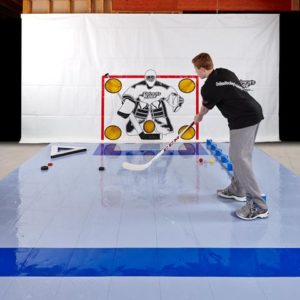
I was recently watching a TV feature on an NHL player who invited the viewing audience on a tour of his childhood home. We met his mom and dad, his siblings, his dog, got a tour of the house and hung out with some of his friends. What was really cool was getting to see where and how he spent most of his time growing up, which included his basement where he shot pucks, in his backyard on the family ice rink and even playing tennis, basketball and just about any competitive sport.

As the game of hockey has evolved into a national sport with great players coming from every corner of the U.S., it should come as no surprise to aspiring players that if you want to maximize your potential, it’s really what you to away from the rink that will determine how far you make it as a hockey player.

When players leave practice at the rink, they all have the same decision to make after they get their homework done. As an old coach used to say, ‘we all have the same number of hours in a day, it’s up to you how you spend them’. So players have a decision to make, will they watch TV, play video games, sit on their phone, or work on hockey skills and hockey development?

During one point of the TV feature the father of the NHL player was standing in their unfinished basement which served as their shooting room. The father was standing in front of a wall that, at one point before the color of vulcanized rubber took over, was probably the color of fresh wood and perhaps even the name of the shooting tarp was visible. The puck marks on shooting area of the concrete floor looked like the track at the Daytona 500.

“I can’t tell you how many thousands, and thousands of pucks have been shot down here,” said the father. Later in the show, talking about their backyard rink, it was again stated that the time, memories and frozen toes were too numerous to try to begin to quantify.

Meeting this NHL player via the TV show made me think back to some of my own experiences, and of those around me who were fortunate enough to play in college or even the NHL. They were the first ones on the rink and the last ones to leave. And they were also the players that had a net in their backyard and dozens of sticks in a barrel in their garage with the blades worn down to nothing. These worn out blades and banged up nets were a badge of honor for these players, and a testament to their dedication to the game. You could tell exactly how bad a kid wanted it by the condition of his training area.

And years later, after watching this segment on today’s NHL players, the same is true. So the question is, how bad to you want it? Are you willing to put in what it takes away from the rink?

After all, everyone has the the same number of hours in a day.
13

June

Are You A Big Time Player?

Posted by Greg Carter

Big game players combine their talent and drive to be game changers.

The Stanley Cup Finals is a great time of year. As Wayne Gretzky summed it up in a recent interview “You know that you are in a special place when you look at the out of town scoreboard and there are no games being played.”

Other than the one you are in of course, which at this time of year means only one thing, the Stanley Cup!

There is no bigger stage in hockey than the Stanley Cup, when everything is on the line during an awesome seven game series. It’s the culmination of the season and the playoffs, and the game is being played at an entirely different level. The excitement and adrenaline is at its peak.

So what are some of the key factors in managing all of the stress, excitement and emotions and stepping up and being a big time player in a big time situation?  Here are some common traits of big time players that I’ve seen over the years.

•    As the games and the stakes rise, so too does the play of big game players.  Big game players have the innate ability to keep bringing the energy and leadership that it takes to get the job done. In clutch situations these are the players that are ready and prepared to make it happen. And often times do make it happen.

•    Big game players are those that WANT to be in the ice in overtime and in key situations. They want the puck on their stick, they want to be out there playing great defense to create an offensive opportunity. Big time players have the talent, confidence and determination to make it happen. They are only thinking one thing, not IF we are going to win, but HOW we are going to win. And they want to be out there for every shift to make it happen.

•    As the old cliché goes, “Hard work only comes before success in the dictionary.” Big game players know this, and understand that in order to be successful in that one defining moment, they have to train hard to get there. They shoot pucks. They lift weights. They practice and train with a purpose and with one goal in mind: converting the opportunity that they get to win the big prize. They know that they may only get one chance, and in that moment they know it’s their time to shine.

All players dream of being in the championship games at all levels. And as you watch the Stanley Cup and realize what it means to the best hockey players in the world to be playing for the top prize, you quickly understand that it takes a special player to rise to the occasion and be a big game player.

We hope the Stanley Cup Finals inspired you to train hard this summer, and that you are successful in your very own big games!

Youth hockey players always start the summer with great intentions on training. Developing a better shot, a better stride and a better all-around game might be on your list. So how can you make sure that when the sun sets on Labor Day you will have better skills than the first of June or 4th of July? Here are some tips, and it all starts with a plan.

Make a plan. And make a list. Think back to last season and the areas of your game that you needed to improve on. Prioritize the skills that you are going to focus on and then commit to a regular schedule. Post your plan and your list in an area that you will see it every day, and let it be a motivator to get started, and keep going.

Fun Factor. Summer should be about having fun, and there is no reason that your training can’t be fun, along with some sweat and hard work. Turn on some music, dump out a bucket of pucks and start stick handling and shooting. Before you know it, 10 songs will have gone by and your shot will be better for it.

Try Something Different. At our hockey camp we like to talk about training the CARTER Method: C=Control, A=Agility, R=Reflex, T=Technique, E=Edge, R=Retention. Including a new routine or training method into your schedule will help keep things fresh and motivating.

Everyone loves winter hockey, but here at Greg Carter Hockey Schools we especially love summer hockey and all of the training and growth opportunities that come with it. We have watched so many young athletes blossom over the summer months as they push and challenge themselves to get out of their comfort zone and take their game to the next level.

We invite you to take advantage of the outstanding high performance training opportunities we have available this summer. Our hockey school will be in ten states including Alaska, Connecticut, Illinois, Massachusetts, New York, New Jersey, New Hampshire, Pennsylvania, Vermont and Virginia.

For more than two decades our experienced team of coaches has been focused on player development and summer hockey training. We hope to see you at one of our camps this summer and look forward to helping you reach your goals!

08

April

When players sit down and think back upon the long hockey season, there are plenty of ups and downs throughout the season that can be reflected upon. There are the practices and games when everything seems to be going great, and then the times when the pucks are hitting the pipe, passes are bouncing off the stick and nothing seems to be going right.

Good players are able to fight through the ups and downs and consistently bring an effort to each practice and game. There are the times when you feel like you played well but the team loses, other times the team wins without feeling like you played your best game.

Sorting through the individual, as well as the team ups and downs is a key part of evaluating your season, and ultimately setting goals for your summer training. When starting the process of evaluating your season,it’s important to separate out team performance from individual performance. All too often personal goals get lost in the long season and players, as well as parents, start to think that if they team did well, they must have also improved individually. Unfortunately this is just not the case.

To do a thorough job evaluating a season, parents should help their son or daughter take a close look and evaluate personal strengths, and even more importantly, personal weaknesses, which are the key opportunities for positive growth and player development.

Most, if not all of the best hockey players realize early on in their career that in order to reach their full potential they have to set goals, train with those goals in mind, and try to get better each and every day. The process all starts with an honest self-evaluation of the season you just completed, not as a team, but as an individual. Once you determine the player you are today, the fun begins in mapping out the path to become a better player in the future.

To get started with your evaluation, take the time to do the following:

Break down your game into a few categories such as skating, stickhandling, shooting, passing and teamwork. For each of these areas give yourself a grade of 1-3, with the higher number representing a higher competency in that skill area. Remember to be honest in this evaluation; you can only improve if you recognize the areas that need focus.

Once you have graded yourself, start to search out opportunities to improve in these areas. There are plenty of materials to read online, including our Coaches Corner, as well as training aides, summer hockey camps and weekend clinics.

There is a great saying “if it’s going to be, it’s up to me”. Remember this throughout the summer as you work hard training to improve on the skills you have identified in your post season evaluation. There is no easy path to success, and a thorough evaluation followed by a goal setting exercise is a huge first step down the path to success.

Good luck!

Rails

Last year here in Massachusetts Mother Nature delivered us more than 100 inches of snow.  It was a winter to remember with record-breaking snowfall that seemed to find its way into our lives on a daily basis. And just when we dug out from one storm, another was on the way, dumping a dozen more back-breaking inches of snow on top of the sidewalks and driveways that we just got done clearing.

This year we are right around 25 inches of total snowfall, or roughly a quarter of the snowfall of only a year ago. As I was discussing this with someone at the rink the other day, the conversation turned to the hockey season last year, and like the weather, what a difference a year can make.

At this same point last year the guy I was talking with was in the midst of buying every shovel and ice scraper he could get his hands on. He even went out and purchased a brand new snow blower, one of those machines with enough horsepower to throw even the heaviest snow clear across to the other county. This year most of his new equipment has sat unused in his garage.

Just like the weather, the hockey season and player performance can dramatically change from year to year. One season a player may score goals like Jaromir Jagr, but the next have a dip in performance and struggle to find the back of the net.

It’s important to recognize that this is somewhat normal, and that development is a marathon, not a sprint. What players need to focus on is making sure they are preparing themselves not only for the great games and seasons, but also for the times when they need to go back to basics. Like my friend who went out and purchased all of the equipment to be prepared for snow, players should have the tools necessary to be prepared for hockey.

Mastering the fundamentals of hockey is a key ingredient to long term success. There is a belief held by many experts about the ‘10,000 Hour Rule’, which essentially says that 10,000 hours of practice to become world class in a field.  If you are a serious hockey player you have probably heard about this, and are well on your way to finding the training and ice time that will help you master the skills necessary to take your game to the next level.

While it seems no one can accurately forecast the weather (sorry local weatherman), you can help forecast your hockey career. Whether it’s 100 inches of snow and 50 wins one season, or 25 inches and 12 wins the next, the big question is this: Are you going to be prepared?

We hope so, and have plenty of summer opportunities available for players of all ages and skill level. While we don’t have shovels and snow blowers to prepare you for next winter, we have coaches and trainers who know the game and are eager to teach. Thanks for reading and we look forward to seeing you this summer!

The Minnesota Wild and Chicago Blackhawks game last Sunday was awesome on many levels. Playing hockey in the great outdoors is not only fun and entertaining because of the unique setting and outdoor atmosphere, but also because of the action on the ice and the lessons that can be learned. It just seems as though when these multi-million dollar athletes get the opportunity to play in one of these events there are more smiles, more energy and more ‘game’.

After watching all of the action, here are some of the key takeaways that can make youth hockey players better at their own game.

Creativity Reigns. Great players are creative, they know how to create space, buy time and make moves that keep the opposition guessing. For those fortunate to have the opportunity to skate outdoors in the colder climates, ‘rink-ratting’ down at the local park is something that every goal scorer looks back on with fond memories. Great moves are born in the great outdoors, where creativity reigns.

Energy & Excitement. This time of the season is a grind for players as they head into the stretch drive and playoffs. Good coaches find a way to keep the energy and excitement at a high level in players, and Sunday it was evident that playing outdoors had both teams bringing it to a level that both fans and coaches could be proud of. Youth players around the country were surly chomping at the bit to get an outside game of their own going in the driveway or local park; and for good reason.

Fun & Phenomenal. Playing hockey should be fun, and when players are passionate about what they are doing and having fun doing it, success will follow. Anytime a player starts to get down, I always remind them that it’s just a game and that they should be enjoying every practice and every game, every single day! It was clear Sunday the players were having a fun and phenomenal time.

Greatest Game on Earth. One of the NHL’s taglines is that hockey is the Greatest Game on Earth. Watching the Stadium Series games being played outdoors in the elements is only confirmation of this, and that hockey really is the best sport. Watching some of the best players in the world compete outdoors and talk about it like they were back in Peewees or Bantams was extremely refreshing.

Good luck in your push to the playoffs and remember to bring the excitement and energy that you saw in the Stadium Series this past weekend! And if you do, success will follow!

08

March

Rails

Watching Jaromir Jagr pass Gordie Howe for third on the all-time points list is nothing short of a historic moment in the NHL. 743 goals and 1,107 assists. That is simply amazing. When you watch Jagr’s highlight reel goals it becomes evident very quickly that he has great hands, incredible vision on the ice and can shoot and pass the puck with awesome accuracy.

So what can youth hockey players learn from a player like Jagr? There is plenty in his bag of tricks to borrow from, and here are a few of the best.

A Great Teammate. Jagr has played with 8 different teams during his NHL career. Along the way he has played with literally hundreds of players and when you ask them about Jagr, they all say the same thing; incredible talent and great teammate who makes everyone around him better. It’s one thing to have the skill and the will, it’s another thing to want to share it with everyone around you. Great players truly do make everyone around them better.

A Nose for the Net. An old coach used to preach all the time that it doesn’t matter how it goes in, only that it goes in. While Jagr has had plenty of highlight reel goals, he has also scored a lot by simply being in the right place at the right time to bang home a rebound or to redirect a shot. Get to the net and good things will happen!

Outstanding Anticipation.  Parents at hockey school ask me all the time about how to teach players to anticipate the game. The reality is that you can’t teach anticipation, but the best players know where to be on the ice to make things happen. The really good players don’t go to where the puck is, they go to where the puck will end up.

I know we said top 3, but this one is a bonus.

Stickhandling. Again, Jagr has had plenty of highlight reel goals during his career and it just never gets old watching the dangles and dekes. If there is one thing players can do this summer to really take their game to the next level it is stickhandling. Whether it’s a puck on the ice or a ball in the driveway, the hand-eye coordination that it takes to master the skill of stickhandling is a lifetime worth of work. As I tell my own son, you can never shoot enough pucks or stickhandle long enough if you really want to be the best.

Perhaps what is most amazing in all of this is that even with over 1,850 points, Jagr is still more than 1,000 points from catching Wayne Gretzky who is number one on the list with 2,857 career points. More on that in a future article!

Thanks for reading and we hope to see you at one of our camps this summer!

Rails

The Minnesota Wild and Chicago Blackhawks game last Sunday was awesome on many levels. Playing hockey in the great outdoors is not only fun and entertaining because of the unique setting and outdoor atmosphere, but also because of the action on the ice and the lessons that can be learned. It just seems as though when these multi-million dollar athletes get the opportunity to play in one of these events there are more smiles, more energy and more ‘game’.

After watching all of the action, here are some of the key takeaways that can make youth hockey players better at their own game.

Creativity Reigns. Great players are creative, they know how to create space, buy time and make moves that keep the opposition guessing. For those fortunate to have the opportunity to skate outdoors in the colder climates, ‘rink-ratting’ down at the local park is something that every goal scorer looks back on with fond memories. Great moves are born in the great outdoors, where creativity reigns.

Energy & Excitement. This time of the season is a grind for players as they head into the stretch drive and playoffs. Good coaches find a way to keep the energy and excitement at a high level in players, and Sunday it was evident that playing outdoors had both teams bringing it to a level that both fans and coaches could be proud of. Youth players around the country were surly chomping at the bit to get an outside game of their own going in the driveway or local park; and for good reason.

Fun & Phenomenal.  Playing hockey should be fun, and when players are passionate about what they are doing and having fun doing it, success will follow. Anytime a player starts to get down, I always remind them that it’s just a game and that they should be enjoying every practice and every game, every single day! It was clear Sunday the players were having a fun and phenomenal time.

Greatest Game on Earth. One of the NHL’s taglines is that hockey is the Greatest Game on Earth. Watching the Stadium Series games being played outdoors in the elements is only confirmation of this, and that hockey really is the best sport. Watching some of the best players in the world compete outdoors and talk about it like they were back in Peewees or Bantams was extremely refreshing.

Good luck in your push to the playoffs and remember to bring the excitement and energy that you saw in the Stadium Series this past weekend!  And if you do, success will follow!

19

January

Succeed In Scoring More Goals

Posted by Greg Carter

Rails

As the season turns the corner and the standings start to tighten up, players and coaches know that the ticket to the tournament lies in scoring goals. Great defense is important, but you have to score to win the big prize. Here are a few tips to help you find the back of the net in your next game.

Pick a plate. If you ever watch skills competitions there are plates or bulls eyes in each corner that serve as targets for the all-stars to hit. When the pucks hits the plate they either fall off or break. It’s a fun way to show the impact and importance of picking a corner when shooting to score. Next time you are coming down the ice and have a chance to score, rather than firing right at the logo on the goaltenders sweater, think about picking a corner, and blowing up that plate!

Lateral movement. This is important at all levels of the game, but especially at the youth levels where if you can learn it young, you are bound to score a ton of goals. We see this a lot, especially on rebounds, where the puck will bounce from the goaltender right onto the stick of an attacking forward, but rather than moving right or left, the player shoots it right back into the goaltender. Practice moving the puck across your body to both the left and right and before too long it will become second nature to move laterally. And to score more goals!

Pass the puck. Great goal scorers know that they can’t do it alone. Passing the puck to teammates and then moving to open space for the return pass is one of the most effective ways to score goals. If the goalie only has one player to focus on they have a better chance of stopping the puck. Once you start involving other players and the goalie starts moving in their crease, space opens up and you will find more net to shoot at. Pass the puck and skate hard for the return pass or rebound.

Get to the net. This one seems obvious and easy, but the more youth hockey games I watch the more I realize that you can’t instruct players enough when it comes to getting to the net. Whether you are looking for a pass or a rebound, you need to be near the net…not on your way there or skating passed it below the goal line. In any given game there are going to be a lot of puck scrambles, rebounds and passes that happen in and around the crease, and the only way you are going to capitalize is if you skate hard and get there.

Good luck incorporating these tips into your game and have fun scoring your next big goal!

Rails

Here are 5 great skill-based resolutions for youth hockey players!

1. Finish every drill. As a coach, one of the great joys of running practices is in creating great drills that teach players to learn and improve. One of the great disappointments however is when players don’t skate hard through the entire drill. Finishing every drill is important for players as they develop. Whether you are skating lines, shooting pucks or working on edges, give 100% until the drill is complete and you will find yourself developing a new work ethic.

2. Dream. Players of all ages need to dream. Dream of making the team. Dream of scoring the big goal. Dream of winning the big game. Dream of moving on to the next level. Dream of playing in front of a big crowd. Dream of achieving your goals.
“If you can dream it, you can do it.” – Walt Disney 

3. Be a great teammate. The great players that I skated with in college and beyond were also really good teammates. They not only had talent, but they knew how to inspire those around them to work as hard as they did. Everyone wants to be around great teammates as they encourage, promote unity and lead by example.

4. Evaluate & Practice. This one is very important, and it starts with an honest evaluation of your game. If you favor stopping one way over the other, start practicing stopping on your weak edge every time. If you are having a hard time keeping up with teammates, enroll in a summer power skating program and work specifically on skating. If your game needs an overall tune up, enroll in a skills camp where you can work on all aspects of your game. Identify your weaknesses and commit to practicing them.

5. Attitude. Everyone wants to get to the next level and succeed, and we all know that attitude determines altitude. This seems simple, but I guarantee it works! Bring a great attitude to the rink every day, appreciate the opportunity to play the greatest game on Earth and watch your game take off this year!

From our hockey family to yours, Happy New Year and best wishes for a successful 2016!

Subscribe

With RSS feeds, you don't have to visit our site everyday to keep up to date. Simply subscribe to our blog via RSS or Email and our posts will come to you!