19

July

Summer Dreams – Dream Big!

Posted by Greg Carter

A big part of the enjoyment of training hockey players all summer is helping them reach their full potential. And when it comes to dreaming big about hockey careers, we’ve learned to never count out anyone!

Watching the Major League Baseball All Star Game this week it was amazing how many players have made it to the big leagues, despite being undersized. Consider the following players who were featured during the game:

– Atlanta Braves second baseman Ozzie Albies is 5′ 8″. He has 20 homers this season.

– Cleveland Indians second baseman Jose Ramirez is 5′ 9″ and 165 pounds. He has 29 homers so far this season which is tied for first in the American League.

Mookie Betts, a right fielder for the Boston Red Sox, is also 5′ 9″. This season he has hit 23 home runs. Last season he hit 31.

– Often described as the “best inch-for-inch hitter in baseball” Jose Altuve is 5′ 6″. Altuve is a three-time batting champion. He has hit 24 home runs in both of the past two seasons.

All of these players made it to the top of the game because yes, they have a ton of talent. But they also overcame coaches, so-called experts and scouting reports claiming they were too weak, too small or too whatever to make it to the next level. But you know what? They made it to the next level. Why? Because they never game up on themselves!

This summer as you are training and working hard to become a better hockey player you have a decision to make. Are you going to listen to what others might say about your talent or physical stature – good, bad or otherwise – or are you going to stay focused on your training and your goals and overcome the obstacles. You have to believe in yourself before anyone else will!  

A great coach once told me that you can’t ever let anyone control your destiny and that ‘if it’s going to be, it’s up to me”. As you progress through this summer and increase your strength, stamina and skills remember these lessons, and find some inspiration from these ‘boys of summer’ that not only made it to the Major Leagues, but became All-Stars!

Whatever your summer dreams, dream big, work hard and never give up!
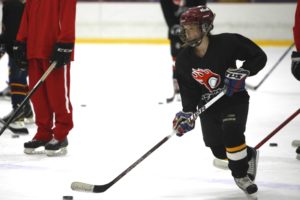
The top players in hockey are the best for many reasons, including possessing above average skill, but in addition to the talent, the best of the best also are the most driven to learn, develop and succeed. As you work hard to improve your game over the next few months, keep in mind the following list of intangibles that will help you make successful strides this summer!

Desire
We love players with desire! Desire to learn, desire to work hard, desire to go the extra mile, desire to be a leader, desire to be a great teammate. Players with desire are a coach’s favorite and the ones they rely on in key situations.

Creativity
Players can’t be afraid to make mistakes, especially at summer hockey school. This is the time to work on areas of your game that you have been compensating for during the season. Try that new move around the defense, take a snap shot rather than a wrist shot, try a deke on the goalie rather than firing the puck right away. Summer is the best time to not only work on new moves, but to incorporate them into your game so that when the season hits, you are ready to win!

Skill
When we talk about the CARTER method of training we incorporate six key areas that build a solid foundation for players: Control, Agility, Reflex, Technique, Edge, Retention. Players of all ages and talent levels need to increase their skill, and hard work is the best way to accomplish this.

Discipline
Good players show up to the rink. Great players arrive early, ready to warm up and are focused on accomplishing something, each and every time they hit the ice. Good players might do this 50 percent of the time, but great players have the discipline to set aside everything else (school, friends, phones, etc.) and focus 100% on hockey during the time they are training. “Discipline is the bridge between goals and accomplishment.”

Dedication
Similar to discipline, dedication is the commitment to the game of hockey, and not just during the fun times (games!) but more importantly, during practices and training, both on and off the ice. If you are both disciplined in your approach to the game, and dedicated to your goals, the sky is the limit!

We look forward to seeing you at the rink this summer. We have camps in ten states over the next few months and it’s not too late to register! Click here for last minute registration opportunities.

The final rounds of the NHL Playoffs have featured some incredible hockey, and a great reminder that who scores is not as important as that you do score.

We see many skilled and talented players at our hockey camps each summer. We love to work on fundamental skills including skating, shooting and stickhandling, as well as agility, edge work, control and technique, which are all part of “The Carter Method” of reaching your full potential as a hockey player.

As we train and help develop the skill of hockey players we like to see the results in scrimmages and games during camp. And what we often see is that some players have very good skill sets, but they lack hockey sense and “hockey IQ” and don’t always make the best hockey decisions.

Common teaching moments include things like forcing a pass rather than taking advantage of open ice and skating with the puck. In the offensive zone players often take bad angle or low percentage shots trying to score, rather than passing the puck to a wide open wing for what could be an easy tap in goal, and an assist.

While we have covered the benefits of watching NHL games to help improve your own game, as well as talking about “me versus we players“, the importance is accentuated when you get down to the final eight or four teams competing for the Stanley Cup.

At this level and at this time of year, it’s clear that individual accomplishments are secondary to the team goal. The team comes first and players are always going to use the best option to make the best hockey play. When the game is on the line, and it’s win or go home, what matters most is that you do score, not who scores.

As you train and develop your hockey skills this summer, continue to improve your hockey IQ and think about always making the best hockey decision, regardless of whether or not your stats will benefit. A group of great teammates will always go further than a group of individuals!

Have a great summer and we look forward to seeing you at hockey camp!

11

April

This spring we’ve seen the first pitch of America’s summer pastime lead to games being postponed because of snow; and wow, have we seen snow! So what has the weather and baseball taught us about hockey? Well, just as we saw at the NCAA Frozen Four, to be prepared for anything.

As the commentators described how the Bulldogs were lucky to even get into the NCAA tournament with the last at-large bid – ironically via an overtime win by Notre Dame who they eventually beat for the National Championship – I was reminded of many times in sports when an unexpected opportunity presented itself, and the outcome being squarely rooted in being prepared.

Just like the UMD team was prepared to make the most of the opportunity to play in the NCAA’s, players themselves need to be ready for the unexpected. When the chance presents itself to fill in on the power play, will you be ready? When your linemate gives you the perfect no-look pass on the tape, will you bury it? When the coach calls your number in the shootout with the game on the line, do you have a ‘go-to’ move or a sure-fire shot?

Even though I wasn’t ready for all of the snow this winter, or what I thought would be a nice little late-season snowfall that lead to a dreadful blast in mid-March, and ended with what we can only hope is a final kick in the teeth last week, I am ready now, with a snowplow large enough to blow out three lanes of interstate highway in a single pass. 

Like our unexpected battles with Mother Nature this winter, UMD’s unexpected birth in the NCAA’s and the boy’s of summer having snow delays, hockey players need to always be ready for what the game presents.

We hope you take advantage of the opportunity to train with us this summer. Our hockey camps have locations in 10 states and specialize in key areas of skill development that we call the CARTER METHOD. This includes the fundamentals of skating, stick handling, and shooting, and we teach in a way that builds confidence and leads to continuous improvement. Control, Agility, Reflex, Technique, Edge and Retention.

Our talented and knowledgeable staff is eager to answer your questions and help you prepare for next season, as well as the next time the unexpected opportunity presents itself. Because when it’s your turn to shine, great teams and great players are prepared, confident and ready to perform!  


25

February

Olympic Inspiration

Posted by Greg Carter

Watching the Olympics in Pyeongchang, and specifically the U.S. Women’s Hockey Team win gold, was a great opportunity for young athletes to gain some motivation and inspiration. Here are some of the excellent lessons and takeaways for hockey players from the 2018 Winter Games.

Follow Your Dream. One of the best parts of the Olympic telecasts are the stories about the athletes themselves. Where they came from, their home town, their grassroots level coaches, their family and friends. When you get a behind the scenes look at these athletes competing on a world stage for all to witness their extreme highs and devastating lows, you realize they are just like . . . you! They started as normal, everyday athletes from across the U.S. who followed their dream, and were lucky enough to accomplish it! What is your dream?

Stick With It. Olympic hockey without NHL players was interesting. Some of the coolest stories were about the players in the twilight of their career who only a short time ago never dreamed of pulling an Olympic jersey over their shoulders. These are the guys who perhaps appreciated it the most; players who grinded through a career in the minors or played in Europe or other far-away places. But their love of the game and commitment earned them a spot representing their country in the Olympics!

Training Pays Off. Whether it was cross country skiing, hockey or snowboarding, these are extremely well-conditioned athletes. Every single one of them. It seemed however, that when you followed the story line of the best of the best, these were the athletes that went above and beyond the rigorous training of their teammates and competitors. Sure, there is some God-given talent in these athletes, but the best of the best combine that talent with a work ethic and training program outdone by no one.

Winning Is The Greatest! Watching the emotional celebrations of the athletes was super cool. Seeing the raw emotions when they captured a medal, it was evident that the culmination of all of their years of training, sacrifice and dedication was spilling over. To spend the thousands of hours training, away from school, family, friends and a normal life, all to capture that win, is something special and should serve as motivation as we all try to win in our own lives each and every day!

The Olympics are a very special time, and there are many inspirational lessons to be learned from all of the athletes from around the world. Take those lessons and apply them to your daily routine for hockey, and you are sure to improve your overall game, on and off of the ice. Thanks for reading, and we invite you to follow your dream with us this summer at one of our 2018 hockey camps located in 10 states! Registration is in full swing, claim your spot today!

31

January

Goal Scorers & Prolific Passers

Posted by Greg Carter

Most teams have a goal scorer that can be counted on to find the back of the net on a regular basis. And as every good hockey coach will attest to, wherever you find a goal scorer, there is usually a great playmaker nearby. While everyone wants to score goals, having the talent to read a play and put the puck on the tape is an equally impressive skill.

Are you a good passer? Making a good pass can be the difference between winning and losing a game. In practice it can be the difference between a great start to a drill, or it ending before it ever begins as the puck slides down the entire length of the ice.

Practicing passing, and the proper fundamentals, should be a regular part of your skill training. Becoming a better passer is a simple way for players to make huge contributions to their team, and it all starts with a good hockey personality. A good personality you might ask? Absolutely, because in order to be a good passer you can’t be a puck hog! Great passers have a high ‘hockey IQ’ and try to making the right hockey play, not just trying to light the lamp themselves. And best of all? Great playmakers know that when they make a great pass, they oftentimes can expect a great pass back!

Tips and tricks to passing with precision:

Vision. Making a good pass starts with keeping your head up and being aware of the play. The skill of passing involves reading and anticipating the play, and not just making a pass, but making the right pass.

Accuracy = Tape-to-tape. Players hear this all of the time from coaches, and in order to make an accurate pass you need to look at your target and make a good, crisp pass with a proper follow through. Taking the extra split second to find your target and see how fast he is moving is something that will come naturally with practice. A pass into the skates of your linemate is a surefire way to quickly end a breakout or breakaway. Practice makes perfect, so hit the tape every time in practice and you stand a good chance of doing the same in the game!

Mechanics. The mechanics of passing have changed over the years as sticks have evolved. Gone are the days of needing to over emphasize receiving the puck, especially as players get older and stronger and the stick flexes when receiving passes. Some fundamentals do remain constant, such as not slapping at the puck. This is a common mistake players make at younger ages. Instead of slapping at the puck, players should concentrate on the puck rolling off the blade from the heel toward the toe in a sweeping motion. Weight transfer is also important, so move from your back to front skate as you begin your follow through.

Once players master the basic fundamentals of passing, they can start to practice more advanced passes such as a saucer pass, which is one of our absolute favorites! Take the time to work on your skills so that when the game is on the line, you make the perfect tape-to-tape pass!

Need more help with your passing and skill development? Join us at one of our 2018 Summer Hockey Camps in ten states this summer!

15

January

There are two types of hockey players, a player who thinks of themselves first, and the player who is unselfish, and puts the team first. If you want to play at the next level, your best chance is not by being a “me” player focused on personal stats and accomplishments, but instead by being a player who makes the entire team better through unselfish play.

Someone summarized a recent game by saying that it seems like parents used to come to the rink to cheer on the team, but now they come to the rink to cheer on their child. While every parent wants nothing more than what’s best for their child, hockey is a team sport, and it should be treated that way.

What makes hockey such a great sport is that you celebrate a win, or become humbled by a loss, with your buddies. It can become a major distraction to team chemistry however if a player doesn’t celebrate the win because they themselves didn’t score a goal or make a big play. This is the beauty of the sport of hockey, it was your friends who picked you up and help earned the win so that the next game, it can be your turn to ride the momentum and make the big play.


Every hockey player loves to win! And playing with a “we” versus “me” attitude is a key to this success.

“We” players make the easy pass to their buddy standing on the side of the crease for the tap in goal.

“Me” players take a bad angle shot.

“We” players get off the ice when they can after a good shift.

“Me” players stay on longer than they should.

“We” players celebrate a win, regardless of their personal contributions.

“Me” players celebrate, win or lose, based on how they played.

“We” players win championships!

Coaching hockey and developing skills is extremely rewarding. Players with really good talent need to have a lot of “we” in their game. At younger ages the better players can develop a “do it all” attitude. However as players develop into teenage years, it becomes increasingly more difficult to dominate games. “Me” players need to develop a “we” attitude to play at the next level.

As a college scout recently said to me about a player he was watching “The distinguishing factor for us in recruiting this player versus another with equal talent is that he is selfless and makes the right hockey decisions regardless how it impacts their name in the box score. He puts team success ahead of individual accomplishments. That tells me he understands the game, the team, and that fits in with the culture of my team.”

And just at that moment the “we” player came down on a two-on-one and with an opportunity to shoot from an awkward angle, feathered a saucer pass over the sprawling defenseman’s stick onto the tape of the winger who tapped it into an open net.

With a wink of an eye the scout closed his book and walked off saying I’ll take “we” over “me” every time.

Thanks for reading and we welcome the opportunity to help develop your hockey skills at one of our summer hockey schools located in ten states this summer. Click here for dates and locations!

28

November

I was recently talking with an elite athlete who shared some important advice he had received from his parents:

To play the game is good,
To win the game is better,
To love the game is best of all.

I left the conversation thinking about all of the great players that I have had the pleasure of playing with or coached, and about those who have made it to the Division I level and beyond. Without exception, they all loved the game. Some of them are listed in our hockey camp Hall of Fame.

Youth hockey players, especially as they mature and reach the top of the pyramid, have many influences, and many people trying to give them advice. “You need to do this, and you need to do that.”

This is where one can find the defining fine line between needing to do something, and doing it because you love the game. 

For example, I can remember being at hockey school and receiving instruction on how to improve my shot. I spent many hours working on developing the best shot I possibly could. Yes, I needed to do this, but that’s not why I did it. I practiced shooting until I literally could not shoot another puck because I loved the thought of scoring the winning goal. I loved the thought of the on-ice celebration afterwards. I loved the thought of laughing and having fun in the room after a win with my buddies. And all of these feelings are why I loved the game way back then, and still today.

The encouragement that I received from people closest to me was always centered around the joys of competition, and the satisfaction of coming out on top. Things like ‘hockey is a game of ten-foot races, win the races and you stand a good chance of winning the game.” When someone said that to me, I took that as an opportunity to work hard on my speed. Again, not because someone told me that I had to, but because I wanted to win so bad, and wanted to feel the exhilaration that comes along with it. When you love something the compete level is at its greatest, as are your chances of success.

No one can teach a player to love the game, instead it has to come naturally and with positive encouragement. Teaching versus preaching is important.  Focusing on long-term development versus short-term gain is critical. Car rides home discussing the fun atmosphere of a game, the excitement of the speed and appreciation of the finesses are things that create the emotional connection with a player to the game. And once that positive emotional connection is made, and a vision of that player being in the moment is created, a great future can be built on the foundation.

As you continue down the road this winter with your son or daughter, remember that to play the game is good, to win the game is better, and to love the game is best of all.


16

November

One of my former coaches used to say that if you stay in the moment, good things can happen. I’ve always believed and preached this coaching games when my team is both leading as well as behind, but especially when we are behind by several goals. I was reminded of this former coach after watching an absolutely incredible finish to a recent high school football that made national news.

The game was between two teams from Minnesota. With one minute left in this quarterfinal state tournament game, Maple Grove High School was down by 19 points.

Game over, right?

As fans were heading for the exits, Maple Grove scored a touchdown to make it 27-16 with 59 seconds left in the game. Failed onside kick, and game over, right?

Maple Grove recovered the onside kick and had the ball at mid-field. Ok, interesting, but they still need to score a touchdown, and even if they do, they are still down by five points, and will be kicking off with little or not time remaining. A quick pass led to another touchdown, and suddenly the score was 27-22 with 46 seconds left.

Ok, at this point, it’s been a great story, but there’s no way a football team can successfully execute another onside kick, right? And even if they miraculously did, they would still need another touchdown.

Incredibly, this team recovered another onside kick, and once again had the ball around mid-field. A few pass plays got them down near the goal line, and the next play they ran in their third touchdown in a minute. Pandemonium ensued, and I’m sure sometime later that night the reality of what they had accomplished set in.

In our last blog we talked talked about the awesome baseball we saw during the World Series this year, and about the importance of believing in your own game. We asked the question about when the game is on the line, do you believe and dig down, and think of all of your time, energy and training, and confidently know that you can win.

This football game brought up another important aspect of this, which is not just believing that you have the talent to win, but also and just as importantly, staying in the moment and doing your job.

It would have been very easy for the kicker of this high school football team, down by two touchdowns and thinking the game is over, to not concentrate on the first onside kick. Instead, he executed it flawlessly, as if that kick was going to win the game. He stayed in the moment!

It would have been equally easy for the quarterback to then take the field, still knowing a comeback was nearly impossible, and to lose focus on the plays and passes.

These players stayed in the moment, and even after converting one successful onside kick into a touchdown, did it again, this time to finish a comeback like football fans had never witnessed, and may very well never see again!

Whether you are on the winning side of a game, or the losing side, this wild finish is a great reminder to never lose focus, and regardless of the score, to play hard and do your job until the final second ticks off the clock.

Great coaches leave lasting impressions, and that old coach of mine always taught me to stay in the moment, and I’ve got a feeling both of the teams that participated in this wild game will never forget that same lesson!

We hope you are off to a great start to your season. All of our 2018 summer school dates and locations will be finalized soon. Have a wonderful Thanksgiving Holiday with family and friends and remember, if you stay in the moment, good things can happen!

17

October

Shoot To Thrill

Posted by Greg Carter

When it comes to scoring goals, it all starts with a great shot.

IMG_6250 - Version 2

An old coach of mine used to tell our team that you can never shoot enough pucks, and that the all of the great goal scorers could pick a spot, and hit it 9 out of 10 times. He would then tell us to go home and shoot pucks in the driveway, basement or back yard, and once you hit your target 9 out of 10 times, pick up the pucks and do it all over again.

Of all the great players that I’ve skated with, I always remember the guys who could shoot the puck. Some had a really heavy shot, but not great accuracy. Others could snipe a spot no larger than a mouse hole every time, but weren’t strong enough to beat the better goalies. The really great shooters had a combination of both power and accuracy.

With today’s stick technology, finding the right stick is a very important factor in shooting. The science in sticks today has been a game changer because of the flex and whipping motion that with the right technique, allows players to shoot harder than ever. Make sure to pay attention to the the pattern and flex which will play a role, especially as players get older, in developing a good shot.

So how can you increase the accuracy and power behind your shot? At our hockey camps we stress the importance of the fundamentals in shooting technique. This varies a bit from player to player and also by the age of the player. Older, stronger players have the strength to lean on a stick, creating the torque necessary to best leverage the technology in sticks. Younger players meanwhile, may not have the strength, and need to really rely on accuracy, while developing the strength and technique needed to score on goalies as they get older, and as the goaltenders get better.

Another key to a great shot is keeping your head up and your feet moving. We see a lot of players who have a good shot, but cant snipe the spot because their head is down and they don’t ever see that wide open top corner! Also, as soon as you stop moving your feet, it’s a big clue to the goaltender that you may be going for a deke versus a shot.

If you are spending your time away from the rink shooting pucks , you are already on your way to scoring more goals this season. Remember to practice all shots including the wrist shot, snap shot and slap shot. Each require a unique discipline that with the right stick, will allow you to shoot to thrill!

Subscribe

With RSS feeds, you don't have to visit our site everyday to keep up to date. Simply subscribe to our blog via RSS or Email and our posts will come to you!