20

November

Thanksgiving is an awesome time for hockey players to pause during the break in the action and reflect on the great things to appreciate this season!

Coaches
Coaches play an integral part in the development of hockey players and if you are fortunate enough to have a really good coach, make sure they know how much you appreciate them! It takes a lot of time, energy and dedication to coach youth hockey teams and what you see on the ice from a coach during practice is only part of the story. There is a lot of practice preparation that goes into that one hour practice session and game strategy and oftentimes the coaches are the last to leave the rink after a game or practice. To this day I can still remember my favorite coaches and the important skills they taught me!

Equipment
Technology advancements in equipment over the recent years has been nothing short of amazing. Protective equipment like shoulder pads, gloves and pants (breezers) that used to absorb sweat and water and up weighing what seemed like five pounds heavier at the end of the game, have been replaced with ultra lightweight and super durable protective equipment. Skates are amazingly light and players are spoiled not having to go through a week long painful – sometimes tearful – break them in. Perhaps the greatest advancement has been in stick technology as once a player is strong enough to benefit from the flex, the ability to develop a crazy hard shot is just a matter of putting in the time.

Parents
Hockey parents are the greatest sports parents ever. Parents willingly wake up long before the sun comes up only to stand in a freezing cold ice arena for that 6 a.m. mid-January practice. They travel hundreds and thousands of miles each season and attend enough weekend tournaments that they are on a first name basis with the front desk at the hotel. The dedication of hockey parents is awesome!

Opportunities 
There are more opportunities than ever for hockey players to develop their skills. From regular season hockey teams to in-season weekly skill camps and clinics. There are plenty of AAA teams and of course summer hockey camps and summer hockey schools. Skill development is a marathon, not a sprint, and there are so many great opportunities for players to master the fundamental skills required to reach their full potential!

The Game of Hockey
Perhaps that best thing to be thankful for is the also the most simplistic, the basic fact that kids have the opportunity to play the greatest sport in the world! Hockey has brought so much excitement, joy and happiness, taught so many life lessons, developed so many friendships and brought so many people together in such a positive way. Enjoy the season, fight through the adversity and always remember that hockey is a sport to be enjoyed, win or lose!

Thanks for reading and from our hockey family to yours, have a great Thanksgiving holiday and we hope to see you at the rink soon!


17

January

Tough Season? No Problem!

Posted by Greg Carter

Mid-season can be a challenging time of year for players, coaches and parents. It’s that in between time when the hype and anticipation of the new season has worn off, and although the playoffs are on the horizon, the next few weeks can be a bit of a grind. This can be especially true for players who just aren’t quite having the season they expected.

We have written about the importance of setting goals at the start of the season, and that development is a marathon, not a sprint. This is the time of year to remind yourself of these goals and that this is one season and one moment in time when regardless of how good, bad or average things are going, there is a ton of opportunity down the road, be it the next game, tournament or season!

Many coaches take the opportunity at this juncture to provide mid-season evaluations that should give players some specific examples of successes, as well as areas that need improvement. This feedback should be the motivation for players to refocus and get energized for the homestretch of the season and beyond.

Every team needs positive players who work hard and bring energy to practices and games. As the old saying goes, there is no substitute for hard work, and the best way to get the results that you want is exactly that, working as hard as you possibly can during each and every practice.

Changing the way things are going on the ice can also start with changing habits off of the ice. For example, if you aren’t scoring as many goals as you anticipated, try shooting pucks for 30 minutes prior to going to the rink. If you don’t feel like you have the energy or quickness you need during the game, try changing your warm up routine and pay attention to the types of food and drink you are consuming prior to the game.

Finally, I like to tell the story of a very successful coach who addressed our team prior to a big game by saying “In order to be good, you first have to believe that you are good.” While that is a relatively simple statement, it’s extremely meaningful in that players who enter games and practices with a positive mindset are well positioned to achieve the success they anticipate.

So as you start to enter the final stretch of your season, bring a great ‘can-do’ attitude with an excellent work ethic and you will help your team skate home with the hardware!

09

August

IMG_6806 - Version 2Training hockey players and helping in their development is very rewarding. We’d like to introduce some of the best players we met and had the privilege of working with this summer.
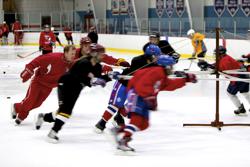
In a recent blog post we introduced you to five people you will meet at summer hockey school. As we enter our final month of hockey school we would like to introduce you to a few of our best players from our travels across the country this summer training hockey players and promoting skill development.

The Character Kid. Everyone knows character counts, and this summer we met plenty of exceptional players and parents who had great character on and off of the ice. When it comes to skill development and becoming a great hockey player, who you are as a person, how you carry yourself and treat teammates is all part of the ingredients for success.

The ‘Centered’ Center. Balance is important not only in skating and performance with stride and hockey skills, but balance is also important when it comes to hockey and a daily routine. Our staff met many hockey players this summer, and those who came to the rink with the most enthusiasm, excitement and willingness to learn were often those who had good balance in their life. Many were multiple sport athletes. Some were taking summer school. Others came from water skiing at the lake to the rink. Remain ‘centered’ with good balance when it comes to your hockey schedule and you will find success.

The Skinny Skillmaster. Most of the players we train at our hockey camps are between the ages of 8 and 16. What this means  for example, is that some Peewees weigh 70 pounds and others might weigh 150. One player thought he needed to really bulk up and gain weight, but what he really needed was patience for his body to grow into his frame. A good diet during this age of development is important. We saw many kids eating junk food, drinking highly caffeinated energy drinks and other foods and beverages that you would never find in a college or professional locker room. Food is fuel for your body, but not all food (and beverages) are good fuel.

We hope you had a great summer of hockey and improved your skills. Make sure to keep these hockey development tips in mind as you work your way through August and onto your team for the upcoming season!

Youth hockey players always start the summer with great intentions on training. Developing a better shot, a better stride and a better all-around game might be on your list. So how can you make sure that when the sun sets on Labor Day you will have better skills than the first of June or 4th of July? Here are some tips, and it all starts with a plan.

Make a plan. And make a list. Think back to last season and the areas of your game that you needed to improve on. Prioritize the skills that you are going to focus on and then commit to a regular schedule. Post your plan and your list in an area that you will see it every day, and let it be a motivator to get started, and keep going.

Fun Factor. Summer should be about having fun, and there is no reason that your training can’t be fun, along with some sweat and hard work. Turn on some music, dump out a bucket of pucks and start stick handling and shooting. Before you know it, 10 songs will have gone by and your shot will be better for it.

Try Something Different. At our hockey camp we like to talk about training the CARTER Method: C=Control, A=Agility, R=Reflex, T=Technique, E=Edge, R=Retention. Including a new routine or training method into your schedule will help keep things fresh and motivating.

Everyone loves winter hockey, but here at Greg Carter Hockey Schools we especially love summer hockey and all of the training and growth opportunities that come with it. We have watched so many young athletes blossom over the summer months as they push and challenge themselves to get out of their comfort zone and take their game to the next level.

We invite you to take advantage of the outstanding high performance training opportunities we have available this summer. Our hockey school will be in ten states including Alaska, Connecticut, Illinois, Massachusetts, New York, New Jersey, New Hampshire, Pennsylvania, Vermont and Virginia.

For more than two decades our experienced team of coaches has been focused on player development and summer hockey training. We hope to see you at one of our camps this summer and look forward to helping you reach your goals!

One of the many great things about hockey camp is the people you meet. Players, coaches, trainers and families from all over the country come together for this special week and it’s nothing short of an awesome experience to skate, talk and learn from others. So who will you meet at hockey camp this summer? Here are 5 people you are sure to have fun with and create lasting memories.

The Coach. We all have a coach who makes an impression on us, and some of the best coaches are those who teach you new things, in a way you have never been instructed. Each summer at camp our students create a bond with a coach that extends long after the week of camp is over. Many keep in touch throughout the season, and we are very proud of our knowledgeable and personable coaching staff.

The New Buddy. Going to a hockey camp can be intimidating, especially when doing it for the first time or going alone. Over the years we have watched kids show up the first day and hardly say a word to anyone, and end up being the kid we can’t keep quiet by the end of the week. Everyone finds a buddy at hockey camp and like the coach, those relationships often last beyond the last day of camp.

The Skillmaster. This one is kind of difficult to explain, but think the top scorer, mixed with a gift of gab and a healthy dose of confidence. Every camp has the player that has worked their tail off and has become just a step faster and a goal better than everyone else. We like these kids at camp because they motivate and inspire – one way or another- for the rest of the players to be just as good as they are.

The Most Improved. The first day at camp is always exciting for everyone, including the staff. We really enjoy getting to know the kids, assessing their talents and identifying their areas for improvements. What we really look forward to on the last day of camp is deciding which player has worked the hardest and developed the most during camp. We have a motto at camp: “get better every day”.  And we push players to do just that.

The Class Clown. This kid is part Drake, part Josh; innocent, but always guilty. He’s the kid everyone at camp instantly connects with, keeps the group bonding and always has something funny to say. Oftentimes the class clown is also the hardest worker and most respectful. But one thing is for certain, he/she is always funny.

There are no shortages of stories, lessons and learning that takes place at hockey camp, and we hope you choose to improve your game and make your memories at our hockey camps this summer. Remember to have fun playing this great game, and to get better every day!

Rails

Here are 5 great skill-based resolutions for youth hockey players!

1. Finish every drill. As a coach, one of the great joys of running practices is in creating great drills that teach players to learn and improve. One of the great disappointments however is when players don’t skate hard through the entire drill. Finishing every drill is important for players as they develop. Whether you are skating lines, shooting pucks or working on edges, give 100% until the drill is complete and you will find yourself developing a new work ethic.

2. Dream. Players of all ages need to dream. Dream of making the team. Dream of scoring the big goal. Dream of winning the big game. Dream of moving on to the next level. Dream of playing in front of a big crowd. Dream of achieving your goals.
“If you can dream it, you can do it.” – Walt Disney 

3. Be a great teammate. The great players that I skated with in college and beyond were also really good teammates. They not only had talent, but they knew how to inspire those around them to work as hard as they did. Everyone wants to be around great teammates as they encourage, promote unity and lead by example.

4. Evaluate & Practice. This one is very important, and it starts with an honest evaluation of your game. If you favor stopping one way over the other, start practicing stopping on your weak edge every time. If you are having a hard time keeping up with teammates, enroll in a summer power skating program and work specifically on skating. If your game needs an overall tune up, enroll in a skills camp where you can work on all aspects of your game. Identify your weaknesses and commit to practicing them.

5. Attitude. Everyone wants to get to the next level and succeed, and we all know that attitude determines altitude. This seems simple, but I guarantee it works! Bring a great attitude to the rink every day, appreciate the opportunity to play the greatest game on Earth and watch your game take off this year!

From our hockey family to yours, Happy New Year and best wishes for a successful 2016!

11

December

Rails

The holidays are a great time of year both on the ice with tournaments and games in full swing, as well as off the ice celebrating the season with friends and family. I have actually found the the month of December to be a really interesting stretch of the hockey season because players are settling in and finding their place on the team.

How is your season starting out? Are you playing on the first line? How about the power play or penalty kill? Are you skating in your preferred position or do your coaches have you elsewhere? Are you scoring as much as you would like?

If you are having the success you anticipated, do you have a plan to continue playing at that level? Or, if you haven’t yet found your stride, are you prepared to work even harder? Youth hockey players at this time of year too often allow their current situation to dictate their work ethic. If they are not skating on the first line they resort to thinking they are a second or third line player. If they are not on the power play or penalty kill, they think they must not be good enough for special teams play. Conversely, some first line players get complacent and stop working hard, thinking that every time there is a power play they are going to be put on the ice.

The holidays are a great time to reevaluate your game and think about all of the hard work you invested over the summer to prepare for the season. It’s an excellent opportunity to rededicate yourself to being not just a good forward or defensemen, but a good, well-rounded hockey player who understands the game and can play in many different situations and positions.

Often times at summer hockey school we train forwards who say they don’t need to work on their backwards skating because they are a forward. Or we see defensemen who don’t work on their offensive moves and scoring because they feel their role is to prevent goals from being scored rather than scoring goals. The best hockey players are those who understand that it takes hard work and consistent effort in all areas to get to making the most out of the season.

As we enter the winter break, here are 3 holiday hockey gifts to help you get the most out of your season!

1. Attitude and work ethic. Playing hockey is one of the great joys of childhood. Make sure you remember this and bring a great attitude and awesome work ethic to every practice and game. A coach once told me that anything worth doing, is worth doing well. I have never forgotten this and it is especially true in youth hockey!
2. Coachability.  Coaches love players that show up ready to go and ready to learn. Make sure that you pay attention and digest what your coach is telling you. Many coaches have years of experience and played the game themselves. Take advantage of the opportunity to learn from those who have already been there and done it. Learn from them and do it better!
3. Pucks & Practice. This is simple. You can never practice enough, and you can never shoot enough pucks.

From our hockey home to yours, enjoy the holidays and we look forward to seeing you at the rink soon!

Greg Carter

27

August

Rails

August is the perfect summer month.

Running a hockey camp in August means that things are winding down after few great months instructing aspiring athletes who have been working hard to take their game to the next level.

Of course it never gets old walking out of the cool rink into the hot and humid summer air.

And in August, the excitement of the summer months is turning to thoughts of Labor Day, school, football and of course the start of another hockey season.

Yes, these are the dog days of summer and they are great times for hockey players.

All of the instruction received over the summer can be put to use during your personal training in preparation for the season.

Shooing pucks with proper form and increased velocity.
Stickhandling with your head up and practicing your new dekes and moves.

We really enjoy watching players in August as they have grown over the past few months, both as hockey players and also in height!

As you finish out your summer vacation we encourage you to continue working hard on everything that you learned at hockey camp this summer.

Players leave camp with the tools they need to become a better hockey player, and we sincerely hope that you use those tools each and every day in practice.

Repetition is a key ingredient to mastering skills so take the time and bring the energy to your training and preseason preparations.

Work the same skills over and over again until you are comfortable executing at full speed.

Enjoy the final weeks of summer and we look forward to keeping up with you this season!

08

April

The Season of Champions

Posted by Greg Carter

Rails

April is one of the great hockey months. In the NHL we have the push to the playoffs, which means a few things: the intensity ratchets up several notches, the speed of the game shifts up a gear or two and of course the facial hair is grown out. During April we also have college hockey’s Frozen Four. This is another great tournament as unpaid players are putting it all on the line not for a huge paycheck, but rather for the simple right to win a championship.

You can’t help but watch the incredible hockey this time of year and wonder, ‘what does it really take to get to that level of play’ . . . not just playing at the highest level, but to advance through the regular season and the playoffs and ultimately hit the ice and play on the biggest stage, under the brightest lights for the right to hoist the biggest trophy.

For most of players, and you’ll hear this in post-game interviews, the ‘what it really takes’ is determination. Not just team determination, but individual determination.  And that determination didn’t just start at the end of the regular season or the weeks leading into the playoffs as the team fought to make the post season. For the most successful players, that determination started a long time ago in a basement, garage, backyard rink or local park.

Determination goes hand and hand with hard work. The great Vince Lombardi once said “The price of success is hard work, dedication to the job at hand, and the determination that whether we win or lose, we have applied the best of ourselves to the task at hand.”

Every hockey player wants to win, wants to make the playoffs, wants to play for the championship and wants to hoist the trophy. The reality is that the players who do end up in these games are the ones who have realized at a young age what it really takes to get there. First and foremost it requires a love of the game. After that, it takes commitment, determination and hard work.

The best players that I’ve played with have all possessed these traits. They were the guys at the rink first and off the ice last. They loved shooting pucks. They loved practicing and trying to get better every day. And I mean every day. They loved being at the rink, and when they weren’t they were making mom and dad upset by staying at the local rink two hours too long. They were quintessential rink rats, who also had skill, determination and weren’t afraid of hard work.

So when you see players on TV hoisting a trophy, some doing so in tears, it’s important to understand that the journey for these players didn’t start at the beginning of the season. It started at the beginning of their recognition that with determination and hard work, there can be no limits to your success.

When does your journey begin?

22

January

Tips for scoring goals

Posted by Greg Carter

Rails

What is more fun than scoring a goal in hockey? Well, maybe assisting on a goal! But there is no arguing that putting the puck by the goaltender is what every player strives for to help their team win, and here are 5 tips to help you score more goals this season.

1. Shoot like you mean it. Too many players shoot like they are trying to just get the puck across the goal line. We often see this when players come to our hockey camp. Shoot like you mean it, and not only want to put the puck in the net, but right through the back of the net!

2. Crash the net. When you know a teammate has a shot on goal, crash the net. This means getting yourself to just outside the crease, not the hash marks or 10 feet out. Getting the rebound just after the goalie gives it up catches him/her out of position, and gives you the greatest opportunity to score.

3. Keep moving. Great players anticipate the play and where the puck is going. Wherever you are on the ice, move your feet and get to the open area or get to the puck first. Using your hockey sense and knowing where to go, and actually getting there, will put you in prime position to score goals.

4. Be confident and patient. These two goal-scoring attributes often go together. Some of the prettiest deke goals result from being confident in a move, and patient enough to wait for the play to evolve to the point you have a clear lane to the net, shot on goal or opportunity to put your move on the goalie.

5. Good old fashioned practice. There are no shortcuts to scoring success, and for every player that scores with a rocket ‘snipe’ and makes it looks easy, they have shot hundreds, if not thousands of pucks on and off the ice. Something we preach at our hockey school is that in practice, finish every drill with a shot on goal like it’s a game situation, not just a shot to finish the drill.

At our summer hockey school and hockey clinics we take great pride in teaching players the fundamentals, as well as advanced skill sets needed to score goals. Check out our summer hockey camps for more information about how we can help you become a better hockey player.

Have you found success scoring goals? We’d love to hear your story, share it

Subscribe

With RSS feeds, you don't have to visit our site everyday to keep up to date. Simply subscribe to our blog via RSS or Email and our posts will come to you!