25

February

Olympic Inspiration

Posted by Greg Carter

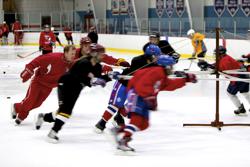
Watching the Olympics in Pyeongchang, and specifically the U.S. Women’s Hockey Team win gold, was a great opportunity for young athletes to gain some motivation and inspiration. Here are some of the excellent lessons and takeaways for hockey players from the 2018 Winter Games.

Follow Your Dream. One of the best parts of the Olympic telecasts are the stories about the athletes themselves. Where they came from, their home town, their grassroots level coaches, their family and friends. When you get a behind the scenes look at these athletes competing on a world stage for all to witness their extreme highs and devastating lows, you realize they are just like . . . you! They started as normal, everyday athletes from across the U.S. who followed their dream, and were lucky enough to accomplish it! What is your dream?

Stick With It. Olympic hockey without NHL players was interesting. Some of the coolest stories were about the players in the twilight of their career who only a short time ago never dreamed of pulling an Olympic jersey over their shoulders. These are the guys who perhaps appreciated it the most; players who grinded through a career in the minors or played in Europe or other far-away places. But their love of the game and commitment earned them a spot representing their country in the Olympics!

Training Pays Off. Whether it was cross country skiing, hockey or snowboarding, these are extremely well-conditioned athletes. Every single one of them. It seemed however, that when you followed the story line of the best of the best, these were the athletes that went above and beyond the rigorous training of their teammates and competitors. Sure, there is some God-given talent in these athletes, but the best of the best combine that talent with a work ethic and training program outdone by no one.

Winning Is The Greatest! Watching the emotional celebrations of the athletes was super cool. Seeing the raw emotions when they captured a medal, it was evident that the culmination of all of their years of training, sacrifice and dedication was spilling over. To spend the thousands of hours training, away from school, family, friends and a normal life, all to capture that win, is something special and should serve as motivation as we all try to win in our own lives each and every day!

The Olympics are a very special time, and there are many inspirational lessons to be learned from all of the athletes from around the world. Take those lessons and apply them to your daily routine for hockey, and you are sure to improve your overall game, on and off of the ice. Thanks for reading, and we invite you to follow your dream with us this summer at one of our 2018 hockey camps located in 10 states! Registration is in full swing, claim your spot today!
28

November

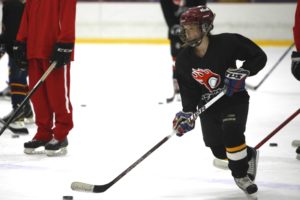
I was recently talking with an elite athlete who shared some important advice he had received from his parents:

To play the game is good,
To win the game is better,
To love the game is best of all.

I left the conversation thinking about all of the great players that I have had the pleasure of playing with or coached, and about those who have made it to the Division I level and beyond. Without exception, they all loved the game. Some of them are listed in our hockey camp Hall of Fame.

Youth hockey players, especially as they mature and reach the top of the pyramid, have many influences, and many people trying to give them advice. “You need to do this, and you need to do that.”

This is where one can find the defining fine line between needing to do something, and doing it because you love the game. 

For example, I can remember being at hockey school and receiving instruction on how to improve my shot. I spent many hours working on developing the best shot I possibly could. Yes, I needed to do this, but that’s not why I did it. I practiced shooting until I literally could not shoot another puck because I loved the thought of scoring the winning goal. I loved the thought of the on-ice celebration afterwards. I loved the thought of laughing and having fun in the room after a win with my buddies. And all of these feelings are why I loved the game way back then, and still today.

The encouragement that I received from people closest to me was always centered around the joys of competition, and the satisfaction of coming out on top. Things like ‘hockey is a game of ten-foot races, win the races and you stand a good chance of winning the game.” When someone said that to me, I took that as an opportunity to work hard on my speed. Again, not because someone told me that I had to, but because I wanted to win so bad, and wanted to feel the exhilaration that comes along with it. When you love something the compete level is at its greatest, as are your chances of success.

No one can teach a player to love the game, instead it has to come naturally and with positive encouragement. Teaching versus preaching is important.  Focusing on long-term development versus short-term gain is critical. Car rides home discussing the fun atmosphere of a game, the excitement of the speed and appreciation of the finesses are things that create the emotional connection with a player to the game. And once that positive emotional connection is made, and a vision of that player being in the moment is created, a great future can be built on the foundation.

As you continue down the road this winter with your son or daughter, remember that to play the game is good, to win the game is better, and to love the game is best of all.


17

October

Shoot To Thrill

Posted by Greg Carter

When it comes to scoring goals, it all starts with a great shot.

IMG_6250 - Version 2

An old coach of mine used to tell our team that you can never shoot enough pucks, and that the all of the great goal scorers could pick a spot, and hit it 9 out of 10 times. He would then tell us to go home and shoot pucks in the driveway, basement or back yard, and once you hit your target 9 out of 10 times, pick up the pucks and do it all over again.

Of all the great players that I’ve skated with, I always remember the guys who could shoot the puck. Some had a really heavy shot, but not great accuracy. Others could snipe a spot no larger than a mouse hole every time, but weren’t strong enough to beat the better goalies. The really great shooters had a combination of both power and accuracy.

With today’s stick technology, finding the right stick is a very important factor in shooting. The science in sticks today has been a game changer because of the flex and whipping motion that with the right technique, allows players to shoot harder than ever. Make sure to pay attention to the the pattern and flex which will play a role, especially as players get older, in developing a good shot.

So how can you increase the accuracy and power behind your shot? At our hockey camps we stress the importance of the fundamentals in shooting technique. This varies a bit from player to player and also by the age of the player. Older, stronger players have the strength to lean on a stick, creating the torque necessary to best leverage the technology in sticks. Younger players meanwhile, may not have the strength, and need to really rely on accuracy, while developing the strength and technique needed to score on goalies as they get older, and as the goaltenders get better.

Another key to a great shot is keeping your head up and your feet moving. We see a lot of players who have a good shot, but cant snipe the spot because their head is down and they don’t ever see that wide open top corner! Also, as soon as you stop moving your feet, it’s a big clue to the goaltender that you may be going for a deke versus a shot.

If you are spending your time away from the rink shooting pucks , you are already on your way to scoring more goals this season. Remember to practice all shots including the wrist shot, snap shot and slap shot. Each require a unique discipline that with the right stick, will allow you to shoot to thrill!

28

November

A new holiday tradition has emerged within a circle of family and friends over the past few years that involves scanning the national news for the footage of outrageous behavior by black Friday shoppers. The excitement and anticipation all kicks off Thursday evening when long lines start to snake their way around the outside of stores as people wait for hours and hours for access to the best deals of the year.

And once the store doors open, it’s like the hole shot at a motocross race, the gates opening at the Kentucky Derby and the opening faceoff at Game 7 of the Stanley Cup Finals all rolled up into one incredibly intense moment. And what happens next is anyone’s guess.

TV footage of these mad scrambles from the front doors of the store to the electronics departments resembles the running of the bulls in Pamplona, Spain. Hearts are pumping and adrenaline is at peak levels, it’s a complete frenzy. And then it happens, excitement turns to frustration, then aggression and ultimately anger. Arguments ensue and in some cases, fights break out and punches are thrown. You really can’t make it up.

So what does the behavior by some holiday shoppers have to do with the behavior of some hockey parents? There are actually some similarities – common denominators – in the behaviors witnessed in both hockey rinks and shopping malls. Unable to control the energy and excitement of the moment, some people tend to let emotions get the better of them, and their better judgement.

As we enter the holiday shopping season, and the invitational hockey tournament season, it’s a great time to take a deep breath and remember what is really important at this time of year, and what type of memories we are creating for our kids around the Christmas tree, and our hockey players around the rink.

Some of the best memories of playing youth hockey don’t involve the wins or losses, but instead the great teammates that turn into great, lifelong friends. Competition can bring out the best, and the worst in people, and it’s up to each individual to decide how they are going to react in emotional situations.

An old coach used to say that if you are properly prepared and confident in yourself and your ability to perform, then you are well-positioned to be successful. Hockey is the greatest game on Earth, and a sport full of excitement, energy and intensity. How parents and players manage emotions during a game can greatly influence the outcome of the situation and whether or not you achieve success.

So whether you are trying to win the race to the puck, or the race to a high-discounted flat-screen TV, remember that both on and off of the ice, this is the most wonderful time of the year!

Youth hockey players always start the summer with great intentions on training. Developing a better shot, a better stride and a better all-around game might be on your list. So how can you make sure that when the sun sets on Labor Day you will have better skills than the first of June or 4th of July? Here are some tips, and it all starts with a plan.

Make a plan. And make a list. Think back to last season and the areas of your game that you needed to improve on. Prioritize the skills that you are going to focus on and then commit to a regular schedule. Post your plan and your list in an area that you will see it every day, and let it be a motivator to get started, and keep going.

Fun Factor. Summer should be about having fun, and there is no reason that your training can’t be fun, along with some sweat and hard work. Turn on some music, dump out a bucket of pucks and start stick handling and shooting. Before you know it, 10 songs will have gone by and your shot will be better for it.

Try Something Different. At our hockey camp we like to talk about training the CARTER Method: C=Control, A=Agility, R=Reflex, T=Technique, E=Edge, R=Retention. Including a new routine or training method into your schedule will help keep things fresh and motivating.

Everyone loves winter hockey, but here at Greg Carter Hockey Schools we especially love summer hockey and all of the training and growth opportunities that come with it. We have watched so many young athletes blossom over the summer months as they push and challenge themselves to get out of their comfort zone and take their game to the next level.

We invite you to take advantage of the outstanding high performance training opportunities we have available this summer. Our hockey school will be in ten states including Alaska, Connecticut, Illinois, Massachusetts, New York, New Jersey, New Hampshire, Pennsylvania, Vermont and Virginia.

For more than two decades our experienced team of coaches has been focused on player development and summer hockey training. We hope to see you at one of our camps this summer and look forward to helping you reach your goals!

One of the many great things about hockey camp is the people you meet. Players, coaches, trainers and families from all over the country come together for this special week and it’s nothing short of an awesome experience to skate, talk and learn from others. So who will you meet at hockey camp this summer? Here are 5 people you are sure to have fun with and create lasting memories.

The Coach. We all have a coach who makes an impression on us, and some of the best coaches are those who teach you new things, in a way you have never been instructed. Each summer at camp our students create a bond with a coach that extends long after the week of camp is over. Many keep in touch throughout the season, and we are very proud of our knowledgeable and personable coaching staff.

The New Buddy. Going to a hockey camp can be intimidating, especially when doing it for the first time or going alone. Over the years we have watched kids show up the first day and hardly say a word to anyone, and end up being the kid we can’t keep quiet by the end of the week. Everyone finds a buddy at hockey camp and like the coach, those relationships often last beyond the last day of camp.

The Skillmaster. This one is kind of difficult to explain, but think the top scorer, mixed with a gift of gab and a healthy dose of confidence. Every camp has the player that has worked their tail off and has become just a step faster and a goal better than everyone else. We like these kids at camp because they motivate and inspire – one way or another- for the rest of the players to be just as good as they are.

The Most Improved. The first day at camp is always exciting for everyone, including the staff. We really enjoy getting to know the kids, assessing their talents and identifying their areas for improvements. What we really look forward to on the last day of camp is deciding which player has worked the hardest and developed the most during camp. We have a motto at camp: “get better every day”.  And we push players to do just that.

The Class Clown. This kid is part Drake, part Josh; innocent, but always guilty. He’s the kid everyone at camp instantly connects with, keeps the group bonding and always has something funny to say. Oftentimes the class clown is also the hardest worker and most respectful. But one thing is for certain, he/she is always funny.

There are no shortages of stories, lessons and learning that takes place at hockey camp, and we hope you choose to improve your game and make your memories at our hockey camps this summer. Remember to have fun playing this great game, and to get better every day!

08

April

When players sit down and think back upon the long hockey season, there are plenty of ups and downs throughout the season that can be reflected upon. There are the practices and games when everything seems to be going great, and then the times when the pucks are hitting the pipe, passes are bouncing off the stick and nothing seems to be going right.

Good players are able to fight through the ups and downs and consistently bring an effort to each practice and game. There are the times when you feel like you played well but the team loses, other times the team wins without feeling like you played your best game.

Sorting through the individual, as well as the team ups and downs is a key part of evaluating your season, and ultimately setting goals for your summer training. When starting the process of evaluating your season,it’s important to separate out team performance from individual performance. All too often personal goals get lost in the long season and players, as well as parents, start to think that if they team did well, they must have also improved individually. Unfortunately this is just not the case.

To do a thorough job evaluating a season, parents should help their son or daughter take a close look and evaluate personal strengths, and even more importantly, personal weaknesses, which are the key opportunities for positive growth and player development.

Most, if not all of the best hockey players realize early on in their career that in order to reach their full potential they have to set goals, train with those goals in mind, and try to get better each and every day. The process all starts with an honest self-evaluation of the season you just completed, not as a team, but as an individual. Once you determine the player you are today, the fun begins in mapping out the path to become a better player in the future.

To get started with your evaluation, take the time to do the following:

Break down your game into a few categories such as skating, stickhandling, shooting, passing and teamwork. For each of these areas give yourself a grade of 1-3, with the higher number representing a higher competency in that skill area. Remember to be honest in this evaluation; you can only improve if you recognize the areas that need focus.

Once you have graded yourself, start to search out opportunities to improve in these areas. There are plenty of materials to read online, including our Coaches Corner, as well as training aides, summer hockey camps and weekend clinics.

There is a great saying “if it’s going to be, it’s up to me”. Remember this throughout the summer as you work hard training to improve on the skills you have identified in your post season evaluation. There is no easy path to success, and a thorough evaluation followed by a goal setting exercise is a huge first step down the path to success.

Good luck!

The Minnesota Wild and Chicago Blackhawks game last Sunday was awesome on many levels. Playing hockey in the great outdoors is not only fun and entertaining because of the unique setting and outdoor atmosphere, but also because of the action on the ice and the lessons that can be learned. It just seems as though when these multi-million dollar athletes get the opportunity to play in one of these events there are more smiles, more energy and more ‘game’.

After watching all of the action, here are some of the key takeaways that can make youth hockey players better at their own game.

Creativity Reigns. Great players are creative, they know how to create space, buy time and make moves that keep the opposition guessing. For those fortunate to have the opportunity to skate outdoors in the colder climates, ‘rink-ratting’ down at the local park is something that every goal scorer looks back on with fond memories. Great moves are born in the great outdoors, where creativity reigns.

Energy & Excitement. This time of the season is a grind for players as they head into the stretch drive and playoffs. Good coaches find a way to keep the energy and excitement at a high level in players, and Sunday it was evident that playing outdoors had both teams bringing it to a level that both fans and coaches could be proud of. Youth players around the country were surly chomping at the bit to get an outside game of their own going in the driveway or local park; and for good reason.

Fun & Phenomenal. Playing hockey should be fun, and when players are passionate about what they are doing and having fun doing it, success will follow. Anytime a player starts to get down, I always remind them that it’s just a game and that they should be enjoying every practice and every game, every single day! It was clear Sunday the players were having a fun and phenomenal time.

Greatest Game on Earth. One of the NHL’s taglines is that hockey is the Greatest Game on Earth. Watching the Stadium Series games being played outdoors in the elements is only confirmation of this, and that hockey really is the best sport. Watching some of the best players in the world compete outdoors and talk about it like they were back in Peewees or Bantams was extremely refreshing.

Good luck in your push to the playoffs and remember to bring the excitement and energy that you saw in the Stadium Series this past weekend! And if you do, success will follow!

Rails

The Minnesota Wild and Chicago Blackhawks game last Sunday was awesome on many levels. Playing hockey in the great outdoors is not only fun and entertaining because of the unique setting and outdoor atmosphere, but also because of the action on the ice and the lessons that can be learned. It just seems as though when these multi-million dollar athletes get the opportunity to play in one of these events there are more smiles, more energy and more ‘game’.

After watching all of the action, here are some of the key takeaways that can make youth hockey players better at their own game.

Creativity Reigns. Great players are creative, they know how to create space, buy time and make moves that keep the opposition guessing. For those fortunate to have the opportunity to skate outdoors in the colder climates, ‘rink-ratting’ down at the local park is something that every goal scorer looks back on with fond memories. Great moves are born in the great outdoors, where creativity reigns.

Energy & Excitement. This time of the season is a grind for players as they head into the stretch drive and playoffs. Good coaches find a way to keep the energy and excitement at a high level in players, and Sunday it was evident that playing outdoors had both teams bringing it to a level that both fans and coaches could be proud of. Youth players around the country were surly chomping at the bit to get an outside game of their own going in the driveway or local park; and for good reason.

Fun & Phenomenal.  Playing hockey should be fun, and when players are passionate about what they are doing and having fun doing it, success will follow. Anytime a player starts to get down, I always remind them that it’s just a game and that they should be enjoying every practice and every game, every single day! It was clear Sunday the players were having a fun and phenomenal time.

Greatest Game on Earth. One of the NHL’s taglines is that hockey is the Greatest Game on Earth. Watching the Stadium Series games being played outdoors in the elements is only confirmation of this, and that hockey really is the best sport. Watching some of the best players in the world compete outdoors and talk about it like they were back in Peewees or Bantams was extremely refreshing.

Good luck in your push to the playoffs and remember to bring the excitement and energy that you saw in the Stadium Series this past weekend!  And if you do, success will follow!

11

December

Rails

The holidays are a great time of year both on the ice with tournaments and games in full swing, as well as off the ice celebrating the season with friends and family. I have actually found the the month of December to be a really interesting stretch of the hockey season because players are settling in and finding their place on the team.

How is your season starting out? Are you playing on the first line? How about the power play or penalty kill? Are you skating in your preferred position or do your coaches have you elsewhere? Are you scoring as much as you would like?

If you are having the success you anticipated, do you have a plan to continue playing at that level? Or, if you haven’t yet found your stride, are you prepared to work even harder? Youth hockey players at this time of year too often allow their current situation to dictate their work ethic. If they are not skating on the first line they resort to thinking they are a second or third line player. If they are not on the power play or penalty kill, they think they must not be good enough for special teams play. Conversely, some first line players get complacent and stop working hard, thinking that every time there is a power play they are going to be put on the ice.

The holidays are a great time to reevaluate your game and think about all of the hard work you invested over the summer to prepare for the season. It’s an excellent opportunity to rededicate yourself to being not just a good forward or defensemen, but a good, well-rounded hockey player who understands the game and can play in many different situations and positions.

Often times at summer hockey school we train forwards who say they don’t need to work on their backwards skating because they are a forward. Or we see defensemen who don’t work on their offensive moves and scoring because they feel their role is to prevent goals from being scored rather than scoring goals. The best hockey players are those who understand that it takes hard work and consistent effort in all areas to get to making the most out of the season.

As we enter the winter break, here are 3 holiday hockey gifts to help you get the most out of your season!

1. Attitude and work ethic. Playing hockey is one of the great joys of childhood. Make sure you remember this and bring a great attitude and awesome work ethic to every practice and game. A coach once told me that anything worth doing, is worth doing well. I have never forgotten this and it is especially true in youth hockey!
2. Coachability.  Coaches love players that show up ready to go and ready to learn. Make sure that you pay attention and digest what your coach is telling you. Many coaches have years of experience and played the game themselves. Take advantage of the opportunity to learn from those who have already been there and done it. Learn from them and do it better!
3. Pucks & Practice. This is simple. You can never practice enough, and you can never shoot enough pucks.

From our hockey home to yours, enjoy the holidays and we look forward to seeing you at the rink soon!

Greg Carter

Subscribe

With RSS feeds, you don't have to visit our site everyday to keep up to date. Simply subscribe to our blog via RSS or Email and our posts will come to you!