22

January

Sure, every player wants more playing time! However, wanting isn’t good enough, you need to earn playing time and here are four tips to work your way into more playing time.

1. The first priority for coaches is how you can contribute on the ice, and for the top players that determination is fairly easy. However, when it comes down to deciding line combinations and playing time amongst players of similar skills, coaches might rely on the player who shows up and does all of the extras. Things like off-ice training sessions, team activities and other team building events. The lesson here is go the extra mile both on and off of the ice

2. When you aren’t getting the ice time you want or thin you deserve, there are two directions you can go, and the best players know that attitude determines altitude. Coaches like players that are plugged in, listen and are coachable. Great coaches pride themselves on developing hockey players as much as they do in winning championships. If you are a coachable hockey player you stand a great chance of improving and earning that playing time!

3. There is no substitution for hard work. We have discussed this in recent articles and the bottom line is to earn more playing time you need to put in the effort. Most often the best players that you see in the games are also the best players in practice and the first ones onto the ice and the last ones to leave. As they say, the only time that success comes before work is in the dictionary!

4. Character counts. That’s right, as you progress through your youth hockey career and players start to separate themselves, character is something that is discusses among coaches. Players who are great teammates and have great character are always going to find a way to be successful. What you do on the ice can get you noticed, but how you carry yourself off of the ice can get you forgotten.

Thanks for reading and good luck as you head towards the final stretch of the season and into the playoffs! Please considering joining us this summer at one of our summer hockey schools located in ten states! For a complete listing and registration information click here.


19

July

Summer Dreams – Dream Big!

Posted by Greg Carter

A big part of the enjoyment of training hockey players all summer is helping them reach their full potential. And when it comes to dreaming big about hockey careers, we’ve learned to never count out anyone!

Watching the Major League Baseball All Star Game this week it was amazing how many players have made it to the big leagues, despite being undersized. Consider the following players who were featured during the game:

– Atlanta Braves second baseman Ozzie Albies is 5′ 8″. He has 20 homers this season.

– Cleveland Indians second baseman Jose Ramirez is 5′ 9″ and 165 pounds. He has 29 homers so far this season which is tied for first in the American League.

Mookie Betts, a right fielder for the Boston Red Sox, is also 5′ 9″. This season he has hit 23 home runs. Last season he hit 31.

– Often described as the “best inch-for-inch hitter in baseball” Jose Altuve is 5′ 6″. Altuve is a three-time batting champion. He has hit 24 home runs in both of the past two seasons.

All of these players made it to the top of the game because yes, they have a ton of talent. But they also overcame coaches, so-called experts and scouting reports claiming they were too weak, too small or too whatever to make it to the next level. But you know what? They made it to the next level. Why? Because they never game up on themselves!

This summer as you are training and working hard to become a better hockey player you have a decision to make. Are you going to listen to what others might say about your talent or physical stature – good, bad or otherwise – or are you going to stay focused on your training and your goals and overcome the obstacles. You have to believe in yourself before anyone else will!  

A great coach once told me that you can’t ever let anyone control your destiny and that ‘if it’s going to be, it’s up to me”. As you progress through this summer and increase your strength, stamina and skills remember these lessons, and find some inspiration from these ‘boys of summer’ that not only made it to the Major Leagues, but became All-Stars!

Whatever your summer dreams, dream big, work hard and never give up!

15

January

There are two types of hockey players, a player who thinks of themselves first, and the player who is unselfish, and puts the team first. If you want to play at the next level, your best chance is not by being a “me” player focused on personal stats and accomplishments, but instead by being a player who makes the entire team better through unselfish play.

Someone summarized a recent game by saying that it seems like parents used to come to the rink to cheer on the team, but now they come to the rink to cheer on their child. While every parent wants nothing more than what’s best for their child, hockey is a team sport, and it should be treated that way.

What makes hockey such a great sport is that you celebrate a win, or become humbled by a loss, with your buddies. It can become a major distraction to team chemistry however if a player doesn’t celebrate the win because they themselves didn’t score a goal or make a big play. This is the beauty of the sport of hockey, it was your friends who picked you up and help earned the win so that the next game, it can be your turn to ride the momentum and make the big play.


Every hockey player loves to win! And playing with a “we” versus “me” attitude is a key to this success.

“We” players make the easy pass to their buddy standing on the side of the crease for the tap in goal.

“Me” players take a bad angle shot.

“We” players get off the ice when they can after a good shift.

“Me” players stay on longer than they should.

“We” players celebrate a win, regardless of their personal contributions.

“Me” players celebrate, win or lose, based on how they played.

“We” players win championships!

Coaching hockey and developing skills is extremely rewarding. Players with really good talent need to have a lot of “we” in their game. At younger ages the better players can develop a “do it all” attitude. However as players develop into teenage years, it becomes increasingly more difficult to dominate games. “Me” players need to develop a “we” attitude to play at the next level.

As a college scout recently said to me about a player he was watching “The distinguishing factor for us in recruiting this player versus another with equal talent is that he is selfless and makes the right hockey decisions regardless how it impacts their name in the box score. He puts team success ahead of individual accomplishments. That tells me he understands the game, the team, and that fits in with the culture of my team.”

And just at that moment the “we” player came down on a two-on-one and with an opportunity to shoot from an awkward angle, feathered a saucer pass over the sprawling defenseman’s stick onto the tape of the winger who tapped it into an open net.

With a wink of an eye the scout closed his book and walked off saying I’ll take “we” over “me” every time.

Thanks for reading and we welcome the opportunity to help develop your hockey skills at one of our summer hockey schools located in ten states this summer. Click here for dates and locations!

17

October

Shoot To Thrill

Posted by Greg Carter

When it comes to scoring goals, it all starts with a great shot.

IMG_6250 - Version 2

An old coach of mine used to tell our team that you can never shoot enough pucks, and that the all of the great goal scorers could pick a spot, and hit it 9 out of 10 times. He would then tell us to go home and shoot pucks in the driveway, basement or back yard, and once you hit your target 9 out of 10 times, pick up the pucks and do it all over again.

Of all the great players that I’ve skated with, I always remember the guys who could shoot the puck. Some had a really heavy shot, but not great accuracy. Others could snipe a spot no larger than a mouse hole every time, but weren’t strong enough to beat the better goalies. The really great shooters had a combination of both power and accuracy.

With today’s stick technology, finding the right stick is a very important factor in shooting. The science in sticks today has been a game changer because of the flex and whipping motion that with the right technique, allows players to shoot harder than ever. Make sure to pay attention to the the pattern and flex which will play a role, especially as players get older, in developing a good shot.

So how can you increase the accuracy and power behind your shot? At our hockey camps we stress the importance of the fundamentals in shooting technique. This varies a bit from player to player and also by the age of the player. Older, stronger players have the strength to lean on a stick, creating the torque necessary to best leverage the technology in sticks. Younger players meanwhile, may not have the strength, and need to really rely on accuracy, while developing the strength and technique needed to score on goalies as they get older, and as the goaltenders get better.

Another key to a great shot is keeping your head up and your feet moving. We see a lot of players who have a good shot, but cant snipe the spot because their head is down and they don’t ever see that wide open top corner! Also, as soon as you stop moving your feet, it’s a big clue to the goaltender that you may be going for a deke versus a shot.

If you are spending your time away from the rink shooting pucks , you are already on your way to scoring more goals this season. Remember to practice all shots including the wrist shot, snap shot and slap shot. Each require a unique discipline that with the right stick, will allow you to shoot to thrill!

There can always be an excuse for why something can’t or didn’t get done. It’s too early, too cold, too late or too difficult. But people who set goals and really want to achieve something don’t make excuses. They simply find a way to get it done and make it happen, regardless of the obstacles.

Stairs

I was chatting recently with a rink manager about an NHL player. This arena manager described the player as ‘one of those kids who came to the rink to run stairs‘. He would show up at the rink unannounced, ask permission to run the stairs, and there in the dark – the only one in the entire building – he would start his workout.

Eventually the arena manager started turning on the lights for this athlete and over time developed a friendship.  Sometimes friends would show up to run stairs with him, but eventually they would drop off and within a week or two, it was back to this one player running stairs, alone.

One day the arena manager asked the athlete what happened to his buddies. They had work. They went to the beach. They went fishing. They went to a movie. They were tired . . . The excuses were endless.

However for this one player who set a goal, who wanted to make the most out of his hockey career and play at the highest level he possibly could, there was no stopping him. This was his priority and he wasn’t going to let anything get in the way of it. There were no excuses, ever, for why he couldn’t find time in his daily routine to workout and best prepare himself to reach his goal.

There is a quote that says, “If it’s important enough, you’ll find a way. If it’s not, you’ll find an excuse.”

So this summer ask yourself, are you finding a way, or are you finding an excuse?

02

May

Finding Your Next Level

Posted by Greg Carter

Watching the NHL Playoffs, it becomes obvious very quickly that the players are competing at an entirely different level out there compared to the regular season. The speed and quickness of the game is greater. The intensity is higher. It makes you wonder, how do these players take an already accelerated game to a whole new level?

There is a quote about leadership and coaching that says if you can raise the level of effort and performance in those around you, you are officially a leader. When it comes to coaching hockey players, especially elite hockey players such as those playing in the NHL, finding a way to connect with each player and understanding how to get the most out of them is a key ingredient in the recipe for success.

But when it comes to finding that next level it begins and ends with the individual player. The great Vince Lombardi once said that if you’ll not settle for anything less than your best, you will be amazed at what you can accomplish in your lives. When you watch playoff hockey, these players are not settling for anything less than their best. They lay it on the line for every race to the puck. Every shot on goal and every pass is a laser. The battles in front of the net and in the corners are their own individual cage matches.

When you break down the game and analyze how amazing the individual talent and skill sets are out there, it can be compared to an engine in a machine. If the engine is built properly – in the case of hockey players, developed and trained properly – and also cared for properly, there will be a time when you can run that engine at the highest RPM’s and push it to maximum performance.

Youth hockey players who spend the time training and working on skills are doing just that, they are preparing themselves – their engine – for the periods of time (the playoffs) when they are going to need to rely on optimizing their performance at the highest level.

As the run for the Stanley Cup continues, it should serve as inspiration to take your own game to the next level, to shift your engine into the next gear. There is another great quote about commitment that says you’re either IN or you’re OUT. There is no such thing as life in-between.

We invite you to join us at one of our hockey schools this summer and with our training, find your very own next level!


Hockey SchoolGet ready to start your journey! With the hockey season behind us and summer training and development on the minds of hockey players everywhere, we invite – and challenge – you to become a better hockey player this summer.
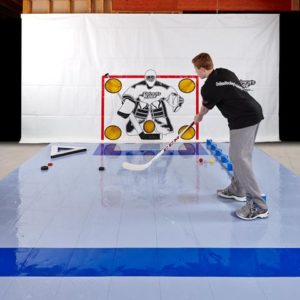
Mapping out your summer hockey training is an exciting process, and our staff at Greg Carter’s Hockey School welcomes you to join us at one of our camps located in 10 states this summer. As we have discussed this season in our many player development articles, we have 23 years in the hockey school business and have enjoyed training thousands of hockey players who come to us sharing the same goal as you; to become a better hockey player!

We take development seriously. Our pro staff challenges skaters to reach their full potential by teaching the fundamentals of skating, stick handling and shooting. We pride ourselves in teaching in a way that builds confidence and leads to continuous improvement. Simply put, at our hockey camps and hockey clinics we offer you the most on-ice instruction with the best results.

A few of the highlights of training with the CARTER METHOD include Control, Agility, Reflex, Technique, Edge and Retention. Our website is loaded with player tips and testimonials about our successful teaching methods. If you are a serious hockey player looking for an elite training program this summer, give us a call or click here to register for one of our programs!

We look forward to a great summer and to having the opportunity to help you achieve your goals!

14

February

Hockey SchoolAs I watched the winning team celebrate a championship at a recent weekend tournament, a parent turned and asked “How in the world did that team win?” My response? By doing the little things.

In every game there are so many things that can go right for a team, as well as go very wrong. When it comes to winning games, especially at this time of year, coaches will tell players to stay out of the box, work hard, play with passion and to give it their all. And within all of these pieces of advice are details that often determine the outcome of a game. And it’s these little details, that when added together, that often play a large role in the final score.

So what are the little things that matter so much? I used to have a coach that said hockey is a game of ten-foot races. Races to the puck. Races to the net. Races to an open area. Quickness is an important aspect of the game and this type of effort is nothing more than will over skill. Teams in the biggest games that win the races are often times the team that also come out ahead on the scoreboard. It’s amazing how many times you see one team start winning the races, and then the other starts to stand around, and once that happens to the other team, good things start happening for your team!

Getting the puck out of the zone or into the zone. Blue line play is so important, yet often overlooked in the flow of the game. During this championship game that I was watching, the winning team won nearly every battle of the blue lines. When they were killing penalties and in a defensive zone scrum along the sideboards, they found a way to get the puck out of the zone, thus killing more time on the penalty. On the other end of the ice, when they needed to get the puck into the zone to get a change, they didn’t simply get it into the zone ten feet across the blue line, they shot it in deep, and made the other team retrieve it, and start back up the ice. Making a team go 185 feet for a goal can make a big difference, no different than field position in football!

Face-offs. As youth hockey players get older face-offs become super important. While the center hopes to win the face-off, the coverage of players by wings is equally important. I watched a face-off in this championship game where the team won an offensive zone face-off and drew the puck back to the top of the circle, but it was picked off by an opposing wing that skated right out through two players that didn’t tie up. The result? A goal on the other end of the ice!

Another great coach once told me that you have to believe you are going to be good before you ever will be good. And while this may seem like a trivial thing, believing leads to confidence, and confidence leads to momentum. Again during this championship game one team not only looked like they wanted it more, but it looked like they believed more!

Good luck in your own playoffs this year and remember, it’s the little things that matter!

Training

I was recently watching a TV feature on an NHL player who invited the viewing audience on a tour of his childhood home. We met his mom and dad, his siblings, his dog, got a tour of the house and hung out with some of his friends. What was really cool was getting to see where and how he spent most of his time growing up, which included his basement where he shot pucks, in his backyard on the family ice rink and even playing tennis, basketball and just about any competitive sport.

As the game of hockey has evolved into a national sport with great players coming from every corner of the U.S., it should come as no surprise to aspiring players that if you want to maximize your potential, it’s really what you to away from the rink that will determine how far you make it as a hockey player.

When players leave practice at the rink, they all have the same decision to make after they get their homework done. As an old coach used to say, ‘we all have the same number of hours in a day, it’s up to you how you spend them’. So players have a decision to make, will they watch TV, play video games, sit on their phone, or work on hockey skills and hockey development?

During one point of the TV feature the father of the NHL player was standing in their unfinished basement which served as their shooting room. The father was standing in front of a wall that, at one point before the color of vulcanized rubber took over, was probably the color of fresh wood and perhaps even the name of the shooting tarp was visible. The puck marks on shooting area of the concrete floor looked like the track at the Daytona 500.

“I can’t tell you how many thousands, and thousands of pucks have been shot down here,” said the father. Later in the show, talking about their backyard rink, it was again stated that the time, memories and frozen toes were too numerous to try to begin to quantify.

Meeting this NHL player via the TV show made me think back to some of my own experiences, and of those around me who were fortunate enough to play in college or even the NHL. They were the first ones on the rink and the last ones to leave. And they were also the players that had a net in their backyard and dozens of sticks in a barrel in their garage with the blades worn down to nothing. These worn out blades and banged up nets were a badge of honor for these players, and a testament to their dedication to the game. You could tell exactly how bad a kid wanted it by the condition of his training area.

And years later, after watching this segment on today’s NHL players, the same is true. So the question is, how bad to you want it? Are you willing to put in what it takes away from the rink?

After all, everyone has the the same number of hours in a day.

17

January

Tough Season? No Problem!

Posted by Greg Carter

Mid-season can be a challenging time of year for players, coaches and parents. It’s that in between time when the hype and anticipation of the new season has worn off, and although the playoffs are on the horizon, the next few weeks can be a bit of a grind. This can be especially true for players who just aren’t quite having the season they expected.

We have written about the importance of setting goals at the start of the season, and that development is a marathon, not a sprint. This is the time of year to remind yourself of these goals and that this is one season and one moment in time when regardless of how good, bad or average things are going, there is a ton of opportunity down the road, be it the next game, tournament or season!

Many coaches take the opportunity at this juncture to provide mid-season evaluations that should give players some specific examples of successes, as well as areas that need improvement. This feedback should be the motivation for players to refocus and get energized for the homestretch of the season and beyond.

Every team needs positive players who work hard and bring energy to practices and games. As the old saying goes, there is no substitute for hard work, and the best way to get the results that you want is exactly that, working as hard as you possibly can during each and every practice.

Changing the way things are going on the ice can also start with changing habits off of the ice. For example, if you aren’t scoring as many goals as you anticipated, try shooting pucks for 30 minutes prior to going to the rink. If you don’t feel like you have the energy or quickness you need during the game, try changing your warm up routine and pay attention to the types of food and drink you are consuming prior to the game.

Finally, I like to tell the story of a very successful coach who addressed our team prior to a big game by saying “In order to be good, you first have to believe that you are good.” While that is a relatively simple statement, it’s extremely meaningful in that players who enter games and practices with a positive mindset are well positioned to achieve the success they anticipate.

So as you start to enter the final stretch of your season, bring a great ‘can-do’ attitude with an excellent work ethic and you will help your team skate home with the hardware!

Subscribe

With RSS feeds, you don't have to visit our site everyday to keep up to date. Simply subscribe to our blog via RSS or Email and our posts will come to you!